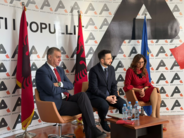
April 9 – A Milestone in Georgia’s Struggle for Independence

Date of article: 09/04/2025

Daily News of: 10/04/2025

Country:  Georgia

Author: Public Defender (Ombudsman) of Georgia

Article language: en

The tragedy of April 9, 1989, completely changed the future of Georgia. This day showed the entire nation that the renewal of the struggle for freedom was vital for the security of future generations.

The 21 victims of the Soviet army’s punitive measures did not go without consequences, and two years later, on April 9, 1991, Georgia adopted the Act of Independence, while on May 26, Georgia was declared an independent state.

Thank you to them for our freedom!

Read more

Volksanwaltschaft setzt 24-Stunden-Intensivpflege zuhause für Salzburger durch

Date of article: 09/04/2025

Daily News of: 10/04/2025

Country:  Austria

Author: Austrian Ombudsman Board

Article language: de

Günter S. hatte einen schweren Unfall, seitdem ist er querschnittgelähmt. Das Land Salzburg weigerte sich, die notwendige 24-Stunden-Intensivpflege zuhause zu finanzieren. Er und seine Familie haben sich an die Volksanwaltschaft gewandt – und die Kritik von Volksanwalt Achitz hat gewirkt: Günter S. kann wieder bei seiner Familie leben. Die Intensivpflege wurde zumindest befristet bewilligt.

„Ich warte seit drei Monaten ohnmächtig. Bitte helfen Sie mir!“, hatte er in einer ORF-„Bürgeranwalt“-Sendung Anfang März noch appelliert. Nun ist er wieder zuhause. „Ich hoffe weiterhin auf eine unbefristete Bewilligung der Intensivpflege zuhause, damit für Günter S. und seine Familie die Zeit der Unsicherheit ein Ende hat“, so Volksanwalt Bernhard Achitz.

Details zum Fall von Günter S. finden Sie hier.

Land und Krankenkasse sollen sich im Hintergrund ausmachen, wer wieviel zahlt

Betroffene wenden sich immer wieder in solchen Fällen an die Volksanwaltschaft. „Dank mehrerer Höchstgerichtsurteile ist klar: Wenn die Betroffenen nicht ins Heim wollen, sondern lieber zuhause bei ihren Familien leben wollen, dann sind Land und Sozialversicherung gemeinsam verpflichtet, die teure Intensivkrankenpflege zuhause zu finanzieren“, sagt Volksanwalt Bernhard Achitz: „Man hat ein Recht darauf, zuhause gepflegt zu werden. Land und Krankenkasse sollen das rasch ermöglichen und sich bitte nachher ausmachen, wer wieviel von den Kosten übernimmt. Die Familien der Betroffenen bleiben ohnehin trotzdem auf hohen Kosten sitzen.“

Natürlich wäre es sinnvoll, wenn es für solche Fälle eine österreichweit einheitliche Lösung gäbe, an die sich alle Länder und alle Sozialversicherungsträger halten würden. Darauf können die Betroffenen aber nicht warten. „Ich kann die Standard-Ausrede nicht mehr hören, dass da der Bund etwas machen sollte. Zuständig sind ganz eindeutig die Länder und die Krankenkassen“, sagt Achitz.

Read more

Amendes, évictions, contrôles : une étude sur la gestion des "indésirables" par la police

Date of article: 09/04/2025

Daily News of: 10/04/2025

Country:  France

Author: National Ombudsman of France

Article language: fr

Mercredi 9 avril 2025, le Défenseur des droits publie une étude sur les pratiques de la police nationale en région parisienne qui met en évidence une politique publique d’éviction de l’espace public de personnes considérées comme indésirables.
Intitulée "Amendes, évictions, contrôles : la gestion des indésirables par la police parisienne", cette étude a été conduite par les chercheuses Aline Daillère et Magda Boutros (Sciences-po : CRIS/CESDIP) à la demande du Défenseur des droits.

Sur la base de l’examen de procédures judiciaires et de conduite d’entretiens, les résultats de l’étude montrent que l’objectif d’ "éviction d’indésirables" de l’espace public, pour reprendre l’expression utilisée par l’institution policière, cible une population précise : des jeunes hommes précaires issus de l’immigration post coloniale, principalement subsaharienne, occupant collectivement l’espace public à proximité immédiate de leur domicile.

Deux outils procéduraux sont mobilisés à cette fin : les contrôles d’identité et les amendes forfaitaires contraventionnelles et délictuelles, qui ont en commun de laisser aux agents de la police nationale une très large marge d’appréciation et de n’être soumis à aucun contrôle juridictionnel, ces derniers étant rendus quasiment impossibles pour ces populations (absence de preuve, procédures complexes, montants de consignation élevés). 

L’étude révèle en outre que la construction de l’indésirabilité est un phénomène social complexe qui excède largement la seule responsabilité des policiers. Le législateur a souvent sacrifié les garanties procédurales sur l’autel d’une efficacité supposée, créant ainsi des procédures susceptibles de générer des abus massifs, dont le juge est absent, car inaccessible dans les faits. Les municipalités ensuite, exercent des pressions sur l’institution policière à des fins de tranquillité publique. Certains riverains enfin, exigent des interventions policières pour évincer des groupes dont la présence dans la rue est à elle seule perçue comme problématique car insécurisante. 

Outre les sentiments d’injustice et de défiance que ces pratiques policières génèrent chez les jeunes , les verbalisations répétées dont ils ont pu faire l’objet, parfois par lots d’amendes sur des périodes de temps extrêmement resserrées, pour des faits retenus allant des incivilités (jet de détritus sur la voie publique, déversement de liquides, nuisances sonores, occupation de halls d’immeubles) à la petite délinquance (usage de stupéfiants) et qu’ils contestent avoir commis, évoquant notamment des pratiques de verbalisation à distance, occasionnent pour eux des dettes pouvant aller jusqu’à 30 000 euros, pour des jeunes gens âgés de moins de vingt ans.

Un tel endettement a pour effet de générer chez ces jeunes des stratégies d’évitement des emplois formels et de l’usage d’un compte bancaire pour faire obstacle à des prélèvements conséquents sur leurs premiers revenus, lesquels avoisinent le montant des minimas sociaux. 

Sans aucune efficacité réelle sur la présence de ces jeunes dans l’espace public, la politique d’éviction menée par les policiers à l’aide des contrôles d’identité et surtout des amendes forfaitaires a en revanche un effet durable d’éviction de ces jeunes de la vie de la cité.

Ces travaux s’inscrivent pleinement dans les missions du Défenseur des droits, en allant bien au-delà du seul contrôle de la déontologie policière. Le rapport contribue ainsi à nourrir les réflexions de l’institution en mettant en lumière les conséquences profondes de ces pratiques, notamment en matière de lutte contre les discriminations, de protection des droits de l’enfant et de respect du bon fonctionnement des services publics.
Ainsi, à l’occasion de cette publication, la Défenseure des droits appelle à la suppression du terme "indésirables" des discours et documents administratifs. Elle demande aux pouvoirs publics d’engager une réflexion sur ces pratiques afin de prévenir les atteintes aux droits qu’elles produisent.

Read more

Paola Baldovino eletta Vicepresidente del Coordinamento Nazionale dei Difensori Civici delle Regioni e delle Province Autonome italiane

Date of article: 09/04/2025

Daily News of: 10/04/2025

Country:  Italy

Author: Italian National Coordination Body of Regional and Autonomous Provinces Ombudsmen

Article language: it

Il nuovo Ufficio di Presidenza del Coordinamento Nazionale dei Difensori Civici delle Regioni e delle Province Autonome italiane ha eletto l’avv. Paola Baldovino come nuova Vicepresidente del Coordinamento. La nomina segue la cessazione dell’incarico dell’avv. Marcello Pecorari, già Difensore Civico della Regione Umbria.

Il Difensore civico regionale Paola Baldovino affiancherà il presidente del Coordinamento, Marino Fardelli, Difensore civico del Lazio, nella guida dell’organismo che riunisce le figure di garanzia regionali italiane. A completare l’Ufficio di Presidenza è Guido Giusti, Difensore civico dell’Emilia Romagna, anch’egli in qualità di vicepresidente.

«Sono molto onorata di essere stata eletta a questo incarico – ha dichiarato la neo vicepresidente Paola Baldovino – poiché credo fortemente nella promozione e nella valorizzazione del ruolo istituzionale della difesa civica che il Coordinamento svolge».

Il presidente Marino Fardelli ha espresso, a nome di tutti i colleghi Difensori Civici italiani, i più sentiti auguri di buon lavoro alla vicepresidente Baldovino, sottolineando «l’importanza di una squadra coesa e competente, capace di interpretare con efficacia le esigenze di tutela dei cittadini nei confronti delle pubbliche amministrazioni».

«Il Coordinamento nazionale – ha aggiunto Baldovino – rappresenta un luogo di confronto per la condivisione di best practices e un’opportunità per uniformare i nostri interventi su tutto il territorio nazionale».

Paola Baldovino è intervenuta di recente al convegno per i 45 anni dell’istituzione della difesa civica nel Lazio, con una relazione dal titolo “Il Difensore civico garante della buona amministrazione”, confermando l’impegno costante nella diffusione della cultura della legalità, della trasparenza e dell’ascolto dei cittadini.

Read more

Significant shortcomings in the patient’s post-operative care, failures in the informed consent process and inadequate contract monitoring arrangements in place

Date of article: 08/04/2025

Daily News of: 08/04/2025

Country:  United Kingdom - Wales

Author: Public Services Ombudsman for Wales

Article language: en

oday we publish a new Public Interest report highlighting significant shortcomings in the patient’s post-operative care, failures in the informed consent process and inadequate contract monitoring arrangements in place between Betsi Cadwalader University Health Board and Health Trusts in England.


The complaint

We launched an investigation after receiving a complaint from Ms A about the care she received from Betsi Cadwaladr University Health Board and Liverpool University Hospitals NHS Foundation Trust (“the English Trust”) which had been commissioned by the Health Board.

Ms A’s concerns included her management and care following surgery for her inflammatory bowel disease in 2019, whether she was properly consented for surgery in March 2022, as well as postoperative care and treatment, and the handling of her complaint.  Whilst our role and remit covers Welsh NHS bodies, as the Health Board commissioned care from the English Trust, our investigation reviewed the care and treatment which Ms A received from the English Trust on behalf of the Health Board.


The findings

Our investigation found multiple failings across various aspects of Ms A’s treatment and care, including failings in colorectal care, and in relation to gynaecological referrals, investigations and treatment undertaken by another English Trust.  This led to Ms A having persistent infection and ill health for nearly 3 years before she received surgical treatment in March 2022.

We found that Ms A did not give informed consent for this surgery – she only signed the consent form on the day of her surgery and there was no record of prior discussion with her of the possibility of her having a hysterectomy during the  surgery.  Although we cannot make definitive findings of a breach of human rights, this failure led to us highlighting that Ms A’s Article 8 rights (the right to respect for private and family life) were potentially engaged.

We were concerned that in its contract monitoring of the commissioned care, the Health Board’s focus and priority was on its financial reporting of the commissioned care and did not include an assessment of the quality of the care and treatment delivered.

“I am mindful of the profound injustice caused to Ms A as a result of the significant failings that have occurred in her case. 

I am extremely concerned about the process by which Ms A gave her “consent” for the surgery in March 2022.  The relevant guidance makes it clear that consent is not simply a matter of completing and signing a form.  Instead, consent is a process which should begin well in advance of the day of the surgery and any discussions should be clearly and separately recorded as part of the consenting process.  This did not happen here. 

This sad case also highlighted the wholly inadequate contract monitoring arrangements in place at the Health Board.  Public bodies must have robust governance arrangements and must ensure that patient safety and the monitoring of the quality of services is in place.

The Health Board’s failure to monitor patient safety and service quality led to it missing crucial opportunities to address poor performance.  With more effective contract monitoring, many of these failings could have been prevented.”

Michelle Morris, the Public Services Ombudsman for Wales.

Our recommendations

We made the following recommendations, which the Health Board has accepted:

  • apologise to Ms A and share the report with relevant Health Board members.
  • request the English Trust to review Ms A’s case, remind clinicians of informed consent and their professional obligations, and share key learnings through a case study of this case.
  • request the Trust’s Surgeon to reflect on the case and discuss improvements to her clinical practice at her next revalidation.
  • seek written assurances from the Trust’s Chief Executive that clinical failings are being addressed and provide compliance evidence to us.
  • Health Board to prioritise, complete and implement a Commissioning Assurance Framework which gives proper consideration to patient safety.
Read more

Link to the Ombudsman Daily News archives from 2002 to 20 October 2011