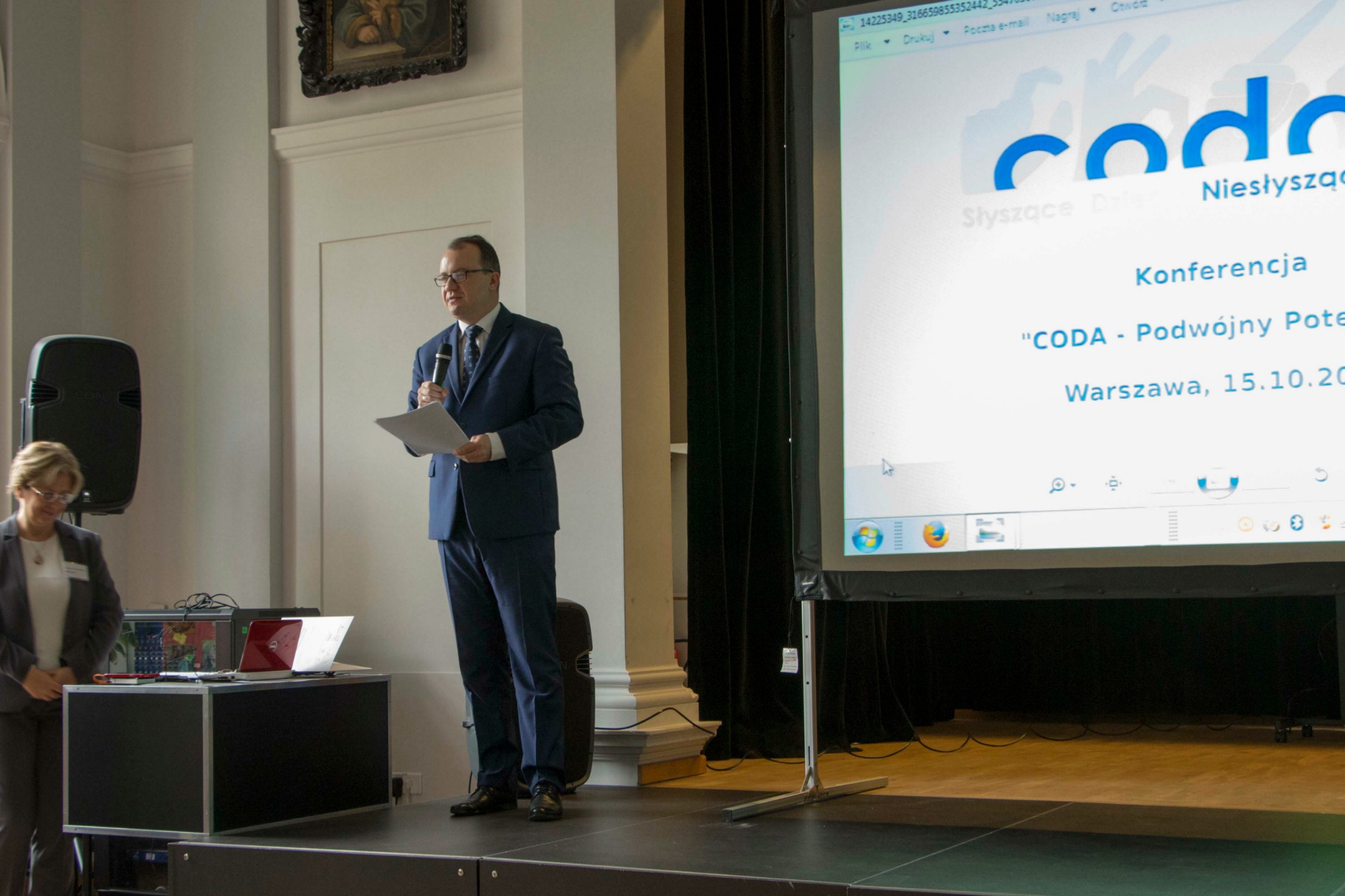
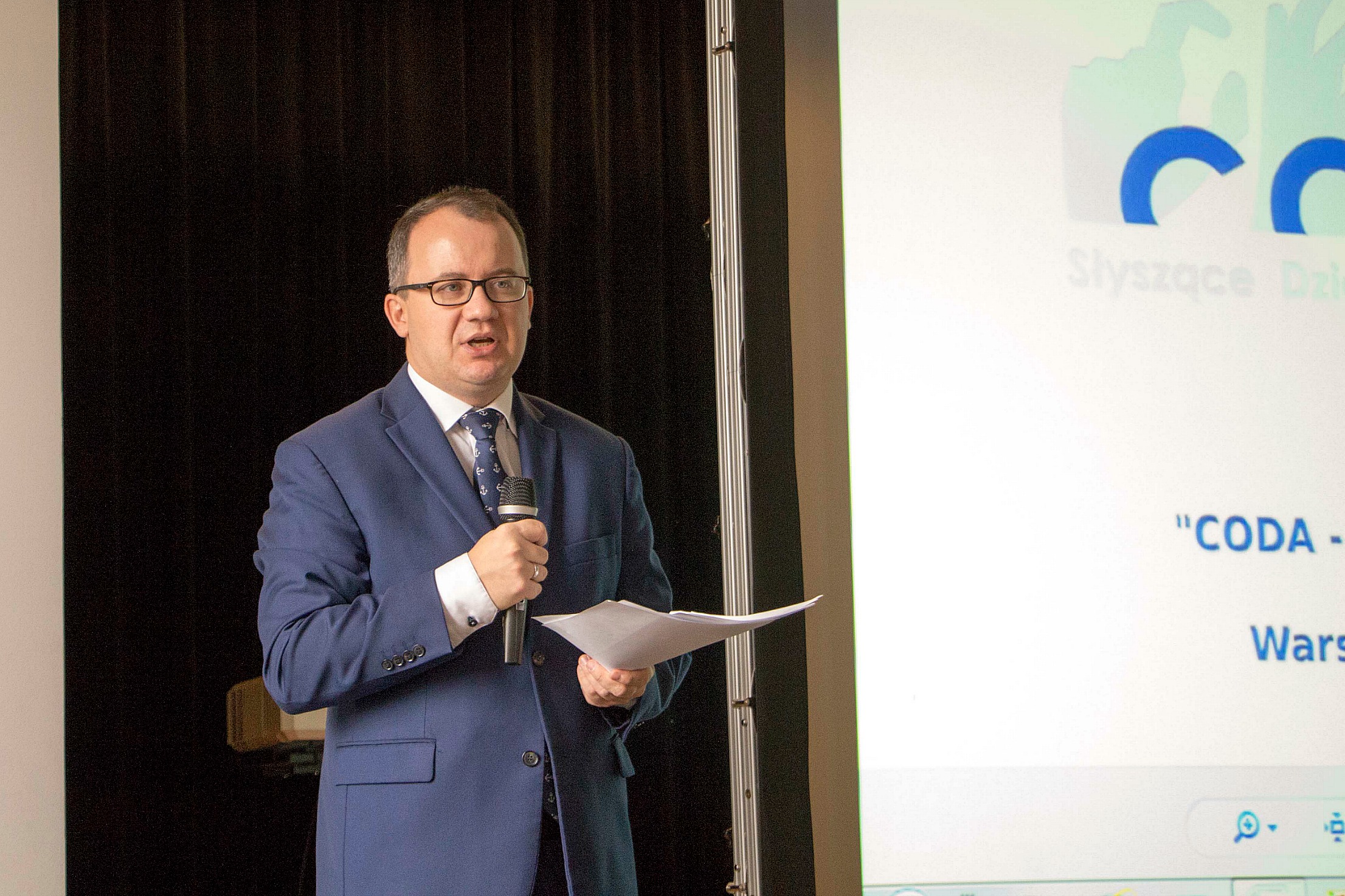
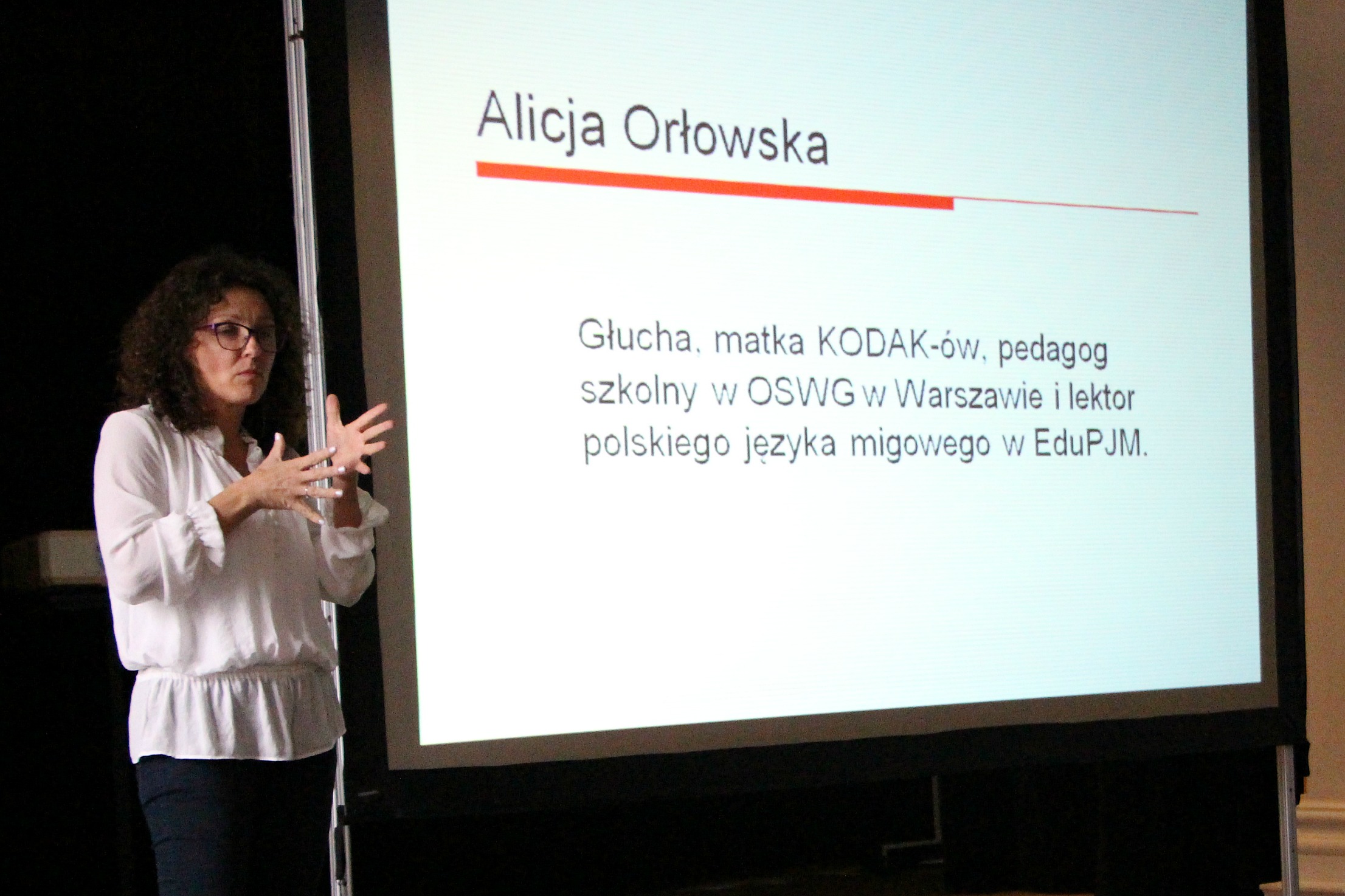
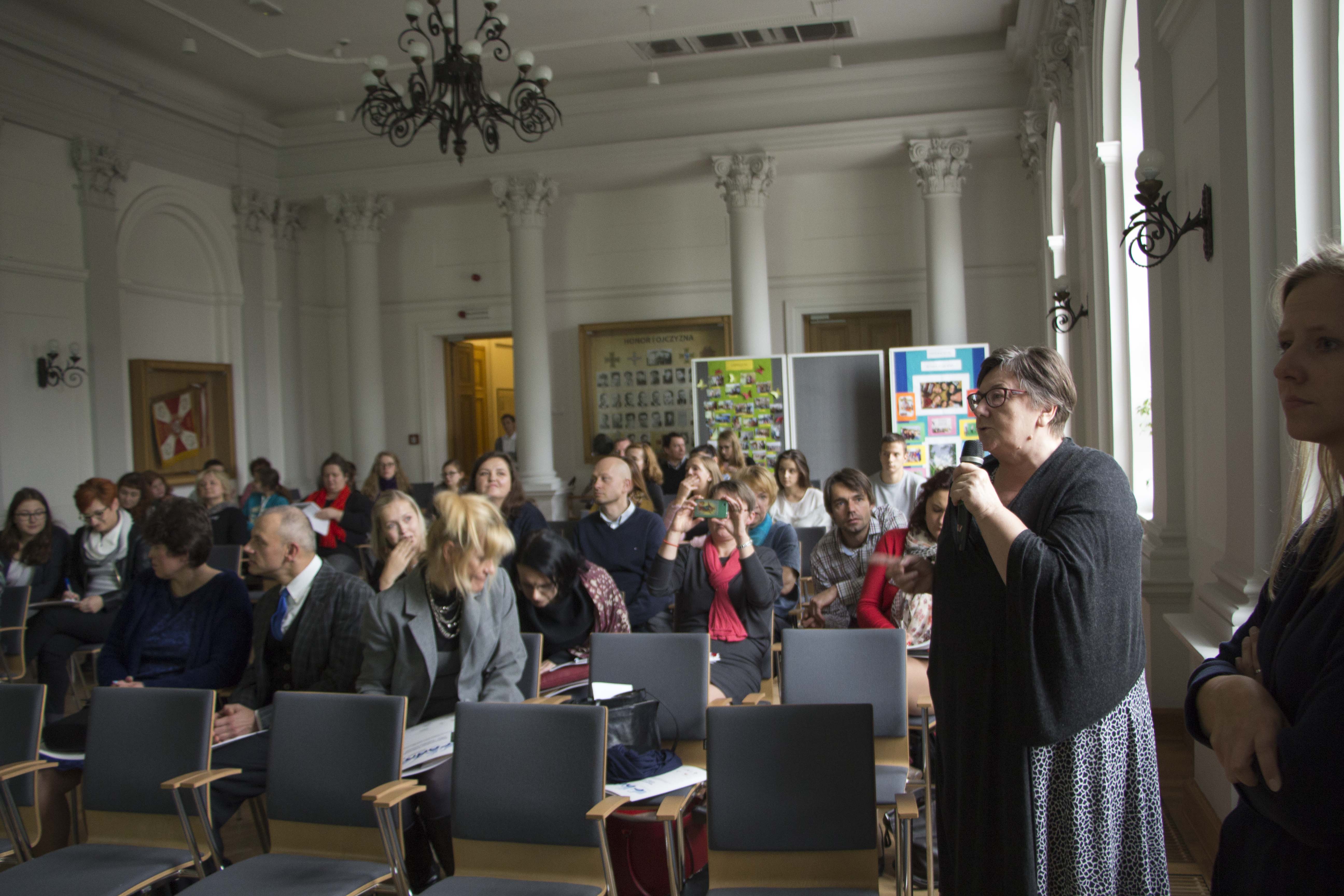
Adam Bodnar at the conference "CODA - the Double Potential" about the situation of healthy hearing children who have deaf parents
Date of article: 15/10/2016
Daily News of: 07/11/2016
Country:  Poland
Author:
Article language: en
The situation of healthy hearing children who have deaf parents was discussed by Adam Bodnar at the conference "CODA - the Double Potential", held in Warsaw on October 15th.
Speech of the Commissioner for Human Rights:
RIGHTS OF DEAF PERSONS AND THE SITUATION OF CODAs IN POLAND
90% of deaf parents have hearing children. The abbreviation ‘CODAs’ ( Children/Child of Deaf Adults) refers to hearing children of deaf parents.
The situation of such children in Poland is more difficult than one would expect. It is such children who, on a daily basis, perform the roles of interpreters for their parents. At a doctor's – they explain the most difficult medical cases and inform their parents about diseases that they themselves are not able to understand. In an office - they fill in forms and applications that pose problems to adults. At a parents-teacher conference - they personally pass information from the teacher to own parents. Therefore, they encounter and come into contact with the world of adults before they can experience their childhood. This happens because they are burdened with duties which, in fact, should be performed by relevant public services.
All those problems were described with great sensitivity by Anna Goc at the end of August in a reportage entitled "Głusza" ("Dead Silence") which was published in Tygodnik Powszechny (https://www.tygodnikpowszechny.pl/glusza-35169).
The situation of parents always affects children and their development opportunities. No wonder then that the situation of deaf parents influences the lives of their hearing children. That influence is very specific in CODA families. The nature of the impact and its scope is unique - due to the specific condition of deaf persons, their method of communication and their relationships with the hearing majority.
CODAs live in two worlds. In brief, the situation of CODAs may be compared to that of immigrants who communicate in their native language at home, and outside of it, in a language spoken in the country where they reside. For this reason, CODAs should receive special education support from the earliest stage. The lower the communication skills and the knowledge of Polish among parents, the bigger the gap between the family and the outside world. This means more problematic adaptation, and difficulties with obtaining competencies that CODAs cannot learn from their parents.
The situation of CODAs depends directly on the situation of their parents. Therefore, the discrimination of the deaf directly limits CODAs opportunities.
Anxiety and stereotypes still dominate in the attitudes towards deaf individuals. In many cases such an attitude also affects their children. The rights of the deaf in Poland are not fully exercised. The deaf are discriminated (they do not enjoy equal rights) due to:
· lack of access to information, limited access to culture;
· weak legal position of the Polish Sign Language, which results in the limited possibilities to educate in that language;
· possibility to communicate with important public institutions (hospitals, courts, children's schools) only in the Polish language;
· communication problems which result in the weaker position of deaf individuals on the labor market.
That is why, the deaf are subject to constant marginalization. They are much more at risk of social exclusion:
· usually, they have low education level;
· around 70% remains jobless;
· they usually work in low paid professions as a result of limited educational offer, the impossibility to improve skills and retrain in adult life, the shortage of jobs adjusted to their needs on the job market, and frequent reluctance of employers to overcome communication barriers;
· they have low awareness concerning their civic rights and struggle to obtain various types of information;
· usually they have small opportunities for integration and inclusion in the activities of well-hearing persons due to the prevalent language barrier.
CODAs require support, yet the fundamental improvement of their situation may be achieved by ensuring the rights of deaf individuals are met.
It is in CODA families where two completely worlds: the one of the deaf, and the one of the well-hearing, meet. They are different in terms of culture and language. This generates challenges to the child upbringing process and builds unique identity of children from such families. CODAs are, in fact, children with special educational needs, just like other bilingual or bicultural children, yet so far they have not been viewed in this way in Poland. It also means that, largely, they do not receive necessary support at schools or from specialized centers. Although nowadays people are talking more and more about sign language and the deaf people's culture, challenges of bringing up hearing children by deaf parents are rarely discussed. What is analyzed even less often are the problems and needs of CODAs themselves. Very few studies are devoted to cases where roles in such families are reversed and mixed, and to excessive burden put on a child who acts an interpreter, a guide and a caretaker for his/her parents, often without any external assistance.
Some deaf parents manage to master Polish in their lifetime to an extent which allows them to communicate with their children effectively - if that is the case, there is no risk to the child's development.
If deaf parents choose the sign language as a leading one, the communication within the family is smooth, yet in the external world the children may encounter problems that are typical for their bilingual or multicultural peers. Bilingualism determines biculturalism and that, in turn, shapes one’s identity. Biculturalism may be an element that enriches personality, but before it happens it usually causes problems. Those problems intensify at the time of starting school education. Among hearing individuals, CODAs may have problems with adapting to different cultural patterns.
In the case of deaf families, there is a need to compensate for deficiencies in the flow of information with the world. The impossibility to use the Polish Sign Language interpreters as a commonly available service results in the fact that it is the children who remove barriers between their deaf parents and the world. They are hence involved to perform roles which excessively burden them and distort their harmonious development (the roles of an interpreter, caretaker, guide, representative and 'spokesperson' of the parents). CODAs are forced to assume responsibility for their own lives and for the family matters.
The consequences may be far-reaching and accompany them throughout adult life. Such persons do not know how to protect their own interests, establish limits and, in general, have a tendency to suppress their feelings and needs in the name of more important things.
Therefore, what happens is the reversal of parent-child roles. The role of the parent/caretaker, played by the child, involves:
· instrumental assistance (interpreting, representing the family in the external world, taking care of various formalities, providing parents with information, clarifying rules applicable in the world of the hearing people),
· emotional support (accompanying parents in difficult situations, protecting and comforting them).
CODAs would not need to assume such roles if public authorities, in accordance with the Convention on the Rights of Persons with Disabilities (CRPD), ensured the removal of the communication barriers and provide support for the deaf, starting from proper education and possibility to use the services of the Polish sign language interpreters in all necessary situations.
The consequences of deaf parents' discrimination are directly reflected in the life of CODAs. They lead to:
· the syndrome of lost childhood;
· lack of time for self-development, lack of support in difficult situations, lack of incentives to develop own potentials, sometimes persistent sense of guilt when they do something for themselves;
· low self-esteem, leading to further negative consequences (depression).
CODA's problems intensify during teenage years when the acceptance of peers becomes particularly important and a young person is ready to do a lot to win approval. In case of CODAs, what constitutes an obstacle is often the lack of tolerance towards deafness in the surrounding environment. The case in point is the history of Dawid from Raczki, a hearing boy who was teased by peers because of the deafness of his mother. This particular case was presented to the Commissioner during a regional meeting in Suwałki (https://www.rpo.gov.pl/pl/content/mieszkancy-suwalszczyzny-opowiadaj%C4%85-rpo-o-swoich-problemach).
Schools could do a lot to improve the situation of CODAs by making pupils familiar with different life situations experienced by others, and by supporting the child itself. What is lacking in schools, however, are proper competencies and knowledge. Therefore, the Deaf Persons Team working under the auspices of the Commissioner for Human Rights has developed a handbook for teachers, educators and counselors which describes the situation of CODAs and explains what relevant actions should be taken. The handbook has been co-authored by dr Małgorzata Czajkowska-Kisil and Agnieszka Klimczewska, whom I would like to thank for preparing the publication entitled "CODA – inność nie rozpoznana" ("CODA - unrecognized otherness"), which will be available soon as a publication of the Office of the Commissioner for Human Rights. Through this simple brochure we are trying to encourage better understanding of CODA pupils by school communities, and improve school's cooperation with their parents. Primarily, we strive to make people realize why a child should not be engaged as an interpreter.
In comparison with well-hearing parents, the deaf have substantially restricted access to information. There are no courses, parental competences workshops, handbooks or educational shows on TV. Both the hearing child and his/her deaf parents are left to their own devices.
I do support the stance presented in the Appeal of CODAs and the Association of the Polish Sign Language Interpreters (available, among others, from the association's website http://www.codapolska.org/apel-coda/) explaining in detail why the current situation needs to be improved. In order to change the situation, teachers should be informed and educated. At the same time, the CRPD should be implemented to ensure that the deaf can enjoy their fundamental rights. It is only the improvement of deaf parents' situation that can bring a lasting improvement in the lives of CODAs in Poland.
It should be pointed out that in compliance with the Act, a deaf individual has the right to contact the "relevant entity" through an interpreter or so-called assisting person. An assisting person, however, should be at least 16 years old, which means that using assistance of a younger child is against the law.
In order to improve the situation of CODAs we should also:
· Acknowledge the different family patterns of communication with CODAs.
· Support bilingualism and biculturalism of children of deaf parents if it exists, to enable wider contacts with both well- hearing persons as well as deaf persons from outside the family.
· Develop CODAs’ social skills, talents and strong points.
· React to signs of discrimination of CODAs, especially in the peer group.
CODAs require support, but a fundamental improvement of their situation may be obtained by ensuring that the rights of deaf persons are met.
What should the Commissioner for Human Rights do to improve the situation of such persons? Simultaneous action is required in two directions: to ensure the rights of CODAs and to fight for the rights of the deaf.
In order to improve the situation of CODAs:
· We may try to involve the Ombudsman for Children, and initiate cooperation with him in that respect.
· We may send the Commissioner’s last publication on CODAs to all interested parties in order to initiate discussions in the communities.
· Submit an inquiry to the Government Plenipotentiary for Equal Treatment and Civic Society relating to his/her planned educational and awareness-raising activities.
· Write an appeal to the Ministry of National Education to make school educators more sensitive in that regard and provide them with necessary competencies for holding interviews with children and their parents.
Yet, the lives of CODAs will improve only if the situation of their parents actually improves. That is why what we should be fighting for the rights of deaf individuals. We should, primarily, fight for the acknowledgement of the Polish Sign Language as a language that is recognized in the Polish law and provided for in the Polish Constitution, just like in the system adopted in Hungary, and for the introduction of the obligation to provide sign-language interpretation at all public institutions.