Responses to high numbers of arrivals still causing concern

Date of article: 20/07/2017

Daily News of: 20/07/2017

Country:  EUROPE

Author:

Article language: en

English
Responses to high numbers of arrivals still causing concern
20/07/2017
Responses by some EU Member States to continuing high numbers of arrivals in Europe remain a cause for concern, according to the latest issue of FRA’s monthly report on migration-related issues.
Read more

Vulnerable adults being let down by poor social work practice

Date of article: 19/07/2017

Daily News of: 19/07/2017

Country:  United Kingdom - England

Author:

Article language: en

Vulnerable people are being forced into situations against their will because care providers are not going through the proper processes, the Local Government and Social Care Ombudsman has found.

In a report published today, the Ombudsman highlights some of the very real concerns it has about the way some of the most vulnerable people in society are being treated when decisions are being made on behalf of people who lack mental capacity to choose how they are cared for.

Problems the Ombudsman sees include not carrying out - or delaying - assessments to determine whether someone has the capacity to make decisions for themselves, poor decision making when deciding on someone’s best interests, and not involving friends and families in the decision process.

The report also includes problems the Ombudsman sees with the Deprivation of Liberty Safeguards System (DoLS) system. This includes cases where people have been left in care homes, having not had the proper assessments carried out - and potentially being deprived of their freedom - for many years.

In the year 2016-17, the Ombudsman investigated more than 1,200 adult social care complaints in detail. Up to one in five of those complaints involved concerns about mental capacity or DoLS. And, most troubling, following investigation, the Ombudsman upheld 69% of those investigations, which is higher than the average figure of 53%.

The Ombudsman’s investigations show that some councils and care providers do not properly understand the processes for making decisions on behalf of people who lack mental capacity.

The report offers advice and guidance to social care professionals on how to get things right when working with people who may lack mental capacity. It also provides questions councillors can use for scrutinising their own authorities to ensure people in their area are treated properly.

Michael King, Local Government and Social Care Ombudsman said:

“The people who these measures are designed to protect are all too often being let down by poor practice. And, while I appreciate the complex emotional and practical decisions social workers need to make, the people they look after are still entitled to be treated fairly, and have their assessments undertaken correctly and in a timely manner.

“People should have the right to make choices for themselves unless they have been assessed as not having capacity. We have issued this report to highlight where things are going wrong, so we can help authorities get things right and improve services for people.“

The Local Government and Social Care Ombudsman investigates complaints about social care however it is funded or delivered and has been at the apex of the complaints process for adult social care provision for more than 40 years. We were given jurisdiction to investigate complaints about all independent registrable care providers in 2010.

The Ombudsman’s role is to remedy individual injustice and, by sharing the learning from the complaints we investigate, effect local service improvements.

We also work closely with care regulators, the Care Quality Commission and share our findings to inform their inspections of care settings.

Read more

Necessity to ensure independence of Ombudsman for Children

Date of article: 14/07/2017

Daily News of: 19/07/2017

Country:  Croatia

Author:

Article language: en

Draft Act on Ombudsman for Children does not allow an independent work of this institution, primarily because it envisages a dismissal of the Ombudsman in case of the rejection of the annual report. Furthermore, due to a formal narrative of the Constitutional Court decision regarding annulment of the previous Act, it remains unclear why the Draft Act stipulates that the government shall at latest within 90 days from entering into force of this Act, propose to the Croatian parliament a new Ombudsman for Children.

It is necessary that, instead of by the Government, the procedure for election of the Ombudsman for Children be initiated by the Croatian parliament based on public announcement, as provided in the Ombudsman's Act.

These are a part of the opinion on the Final Proposal of the Ombudsman for Children's Act, which the Ombudswoman Lora Vidović sent on 10th July 2017 to the Croatian parliament.

Although in Croatia only the parliamentary Ombudsman complies with the strict criteria for an institution to be granted the NHRI status, as requested by the Paris Principles, it is advised to pursue the highest possible conformity with the Paris Principles while prescribing the work of special ombudsmen, in order to perform its duties independently and autonomously. UN Committee on the Rights of the Child, responsible for monitoring progress in implementation of the Convention on the Rights of the Child's obligations in its Closing remarks 1996, 2004 and 2014, also recommended to Croatia to strengthen  the capacity and independence of the Office of the Ombudsman for Children. 

Considering the law maker’s support for the existence of the institution which shall independently and autonomously monitor and promote the rights of the child to be positive, it is obvious that the proposed draft Act does not provide for such mandate.

Council of Europe Commissioner for Human Rights Nils Muižnieks, reacted as well stating that he understood the legal vacuum must be fulfilled but retained his concerns that the draft law might hinder the independence of this institution.

Read more

Ageing has to include dignity and human rights

Date of article: 08/07/2017

Daily News of: 19/07/2017

Country:  Croatia

Author:

Article language: en

People everywhere must be allowed to age with dignity and human rights, stressed the participants of the Eights session of the Open-Ended Working Group of Ageing (OEWG) that took place from 5 to 7 July 2017 at the United Nations Headquarters in New York. The 8th Session was dedicated to abuse, neglect, violence and age discrimination.

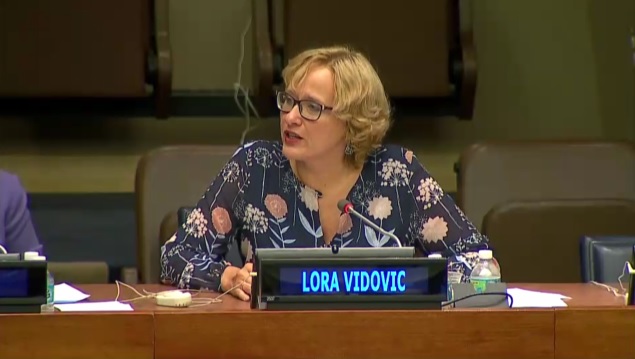
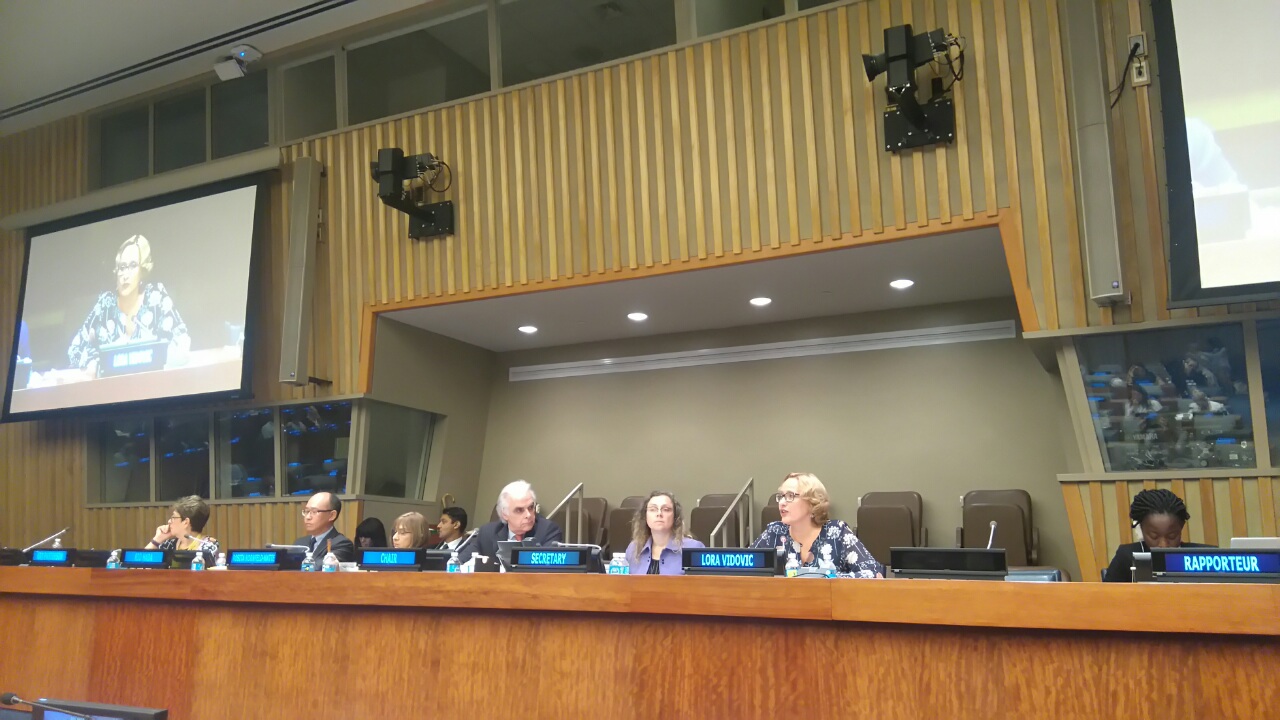
„According to a global study carried out in 28 countries, in 2016, about one in six older persons experienced some form of abuse and estimates suggest that only one in five cases, abuse was actually reported. The reasons for which there is such a high level of unreported violence are multiple and complex, and we know that many victims don't report because they feel ashamed, powerless and fear reprisals, particularly when it comes to domestic violence“, Ombudswoman and Chair of European Network of National Human Rights Institutions (ENNHRI) Lora Vidović stated in her speech. She added that national human rights institutions (NHRI) can see directly, through all segments of their works, how much still needs to be done for stronger protection of human rights of elderly, and therefore encourage the states to work towards a convention on the rights of the elderly.

NYC OEWG8 2017 1

NYC OEWG8 2017 5


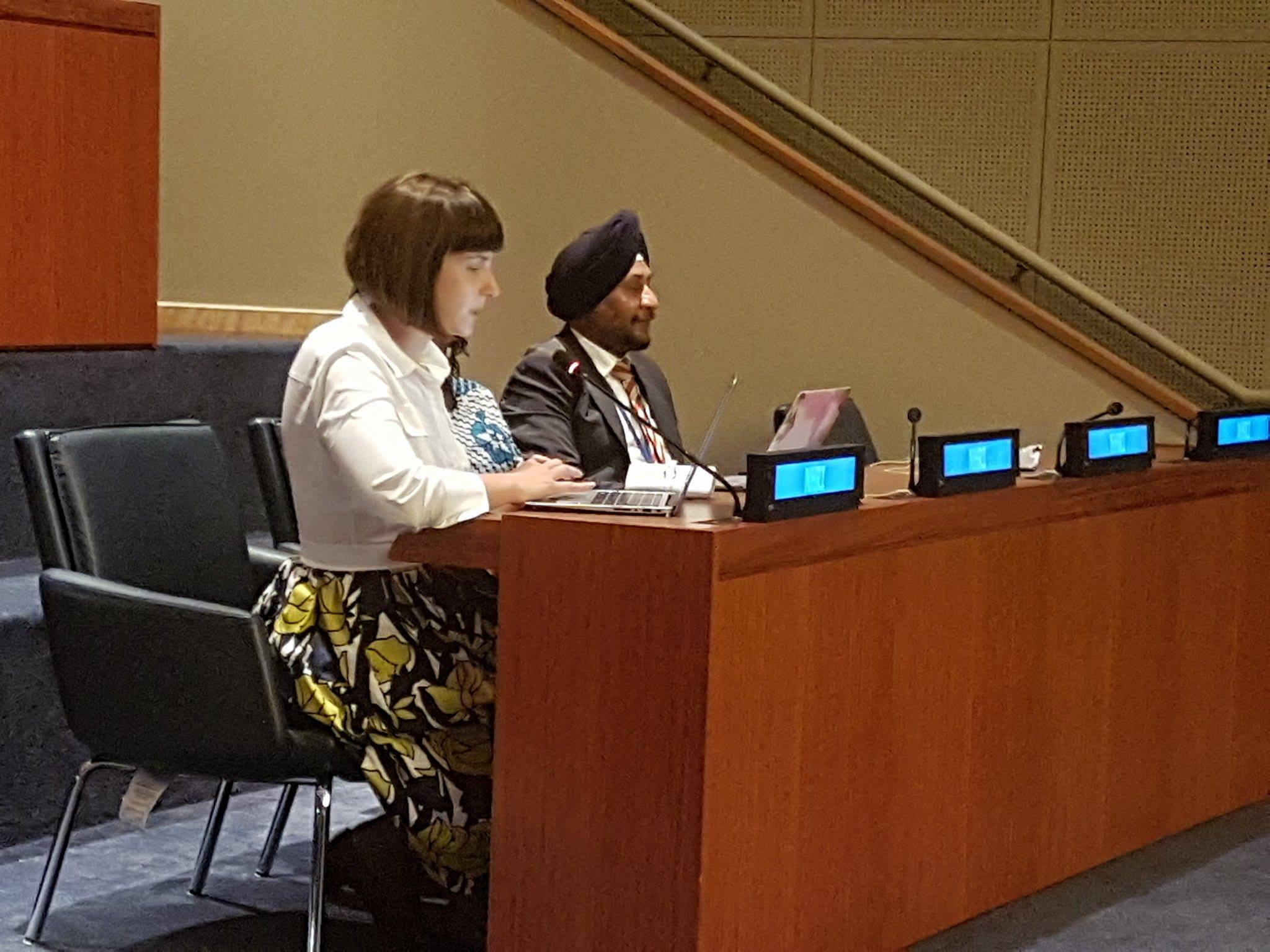
Orhideja Skale Družak, legal advisor of the Ombudswoman, presented roblems that elderly in Croatia face due to poverty, for example when seeking housing in long-term care facilities. “Financial reasons make it impossible to pay for a private care homes, since most are too expensive. On the other hand, there is a chronic shortage of vacancies in public care homes which are more affordable but have long waiting lists and admission criteria lack transparency”.

The eight OEWG on Ageing session is historic for NHRIs, who for the first time had an opportunity to speak. Beside the ombudswoman, the representative of the Ombudsman of Poland used the opportunity as well.

“Our role as NHRIs, is among other things, to bring the voices of citizens, often the most marginalized, to the Governments, parliaments, other decision makers, and even to the general public. We use what we learn from investigating their complaints to advocate for better, inclusive, and sustainable policies that would reflect their needs and recognize them as rights holders. NHRIs also have a role in bridging international and national arenas by bringing international standards to the local level, but we also have unique opportunity to inform international community of most pressing and acute human rights issues”, said Ombudswoman Vidović.

During the three day session, side events were held as well. The Ombudswoman chaired the presentation of the ENNHRI project on elderly and report “We have the same rights - The Human Rights of Older Persons in Long-term Care in Europe”, organised by ENNHRI and EU delegation at the UN. She was also a speaker at the side event organized by the Global Alliance of National Human Rights Institutions (GANHRI) and Asia-Pacific Forum (APF).

The ninth OEWG on Ageing session will be dedicated to autonomy and independence, long term and palliative care.

Read more