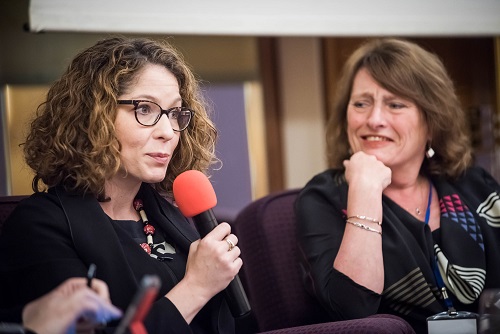
Complaints, inquiries and activities in the first quarter of 2017

Date of article: 16/05/2017

Daily News of: 16/05/2017

Country:  Czechia

Author:

Article language: en

A total of 2170 complaints were received in the first quarter of 2017, which is 60 more than in the same period last year. The ombudsman was approached by 1462 persons in matters falling within her competence under the law, which is 79 more than in the first quarter of the past year.

Thus, the proportion of complaints falling within the Defender’s mandate increased to 68% (the figure for the last year was 66%). Most complaints were related to social security (399 complaints); many complaints (159) concerned the area of construction proceedings and spatial planning and also the prison system, police and the army (125).

In 88 of the complaints received, the Complainants claimed unequal treatment by public administration and private individuals. The number of complaints directed against discrimination within the meaning of the Anti-Discrimination Act reached 63. In 16 cases, we also provided information and analyses related to discrimination to international parties and national bodies.

In the first quarter, we performed 5 systematic visits to facilities where persons restricted in their freedom are or may be present. In the area of monitoring detention of foreign nationals and the performance of administrative expulsion, we monitored 1844 decisions.

The ombudsman has resolved e.g. a case of an 18-year-old man who was institutionalised when he was a minor. After coming of legal age, he entered into an Agreement on Voluntary Stay with the children’s home. He terminated the Agreement after six months, left the children’s home and also withdrew from his studies. However, he changed his mind and wished to return to the home and resume his studies. The employees told him that he could no longer return.

The ombudsman was also approached by a father in whose case the body of social and legal protection of children (BSLPC) refused to submit an application to adjust his personal contact with his daughter. The BSLPC was the curator ad litem of his daughter. Court proceedings lasted for over two years.

The ombudsman examined a case where parents came to a hospital for a planned operation of their two children (less than 2 years old and 3.5 years old). They had an Agreement with the hospital that the father would remain with the children after the operation. In the end, the hospital only offered the mother and grandmother to stay with the children in the hospital and referred the father to its accommodation facility.

The Prison Service did not allow a convict to leave prison for the purpose of attending the funeral of his brother and did not duly justify its rejection.

In thousands of cases, the President and Vice-president of the Regional Court in Ostrava removed the parties to the proceedings from the jurisdiction of their statutory judge without ad hoc assessment of admissibility and outside of the rules of the schedule of work.

Within the prevention of ill-treatment and supervision over restrictions of personal freedom, authorised employees of the Office performed a total of 5 systematic visits to facilities and 6 expulsion monitoring trips during the first quarter of 2017.


Read more

25th anniversary of the Ombudsman of Croatia formally commemorated

Date of article: 15/05/2017

Daily News of: 16/05/2017

Country:  Croatia

Author:

Article language: en

With the formal opening of the International Conference „Reclaiming human rights in Europe: How to enhance democratic space?“ 25 years of the Ombudsman's Act was commemorated on the 11th May in the Croatian parliament.

In her welcoming address the Ombudswoman Lora Vidović conducted the guests through the institutional development in the past 25 years and its contribution to strengthening of the democracy in Croatia. „What has not been changed during these years, and I firmly believe that it should remain so, is the basis of the institution's work – these are arguments not sanctions, dialogue not orders, advocacy not legally binding decisions. The ombudsman's authority is one of the characteristics of societies with highly developed democracy and strong rule of law. Having that in mind, I am pleased to conclude that our recommendations and words are more and more loudly and clearly heard and that they are more frequently and promptly answered. Of course, with occasional exceptions which will always be present and which require further efforts in obtaining a constructive dialogue“, stated the Ombudswoman, highlighting the role of cooperation in the institution's performance.

Deputy Speaker of Croatian Parliament Željko Reiner addressed the meeting in the capacity as a special envoy of the Speaker of the Croatian parliament. He singled out that the Conference was the first gathering not organised by the Parliament, and which was taking place in the Session Hall.

UN High Commissioner for Human Rights Zeid Ra'ad Al Hussein expressed his full support to the independence of the national human rights institutions in his video message with congratulations to the Ombudswoman for this anniversary. “I firmly believe that national human rights institutions have a very significant role to play in ensuring that the governments live up to their obligations. You are uniquely situated for maximum impact on human rights issues in each of your countries. There is nothing abstract about human rights principles – they provide detailed, practical guidance to help governments establish sound policies for sustainable developments and peace”, said High Commisioner Zeid.
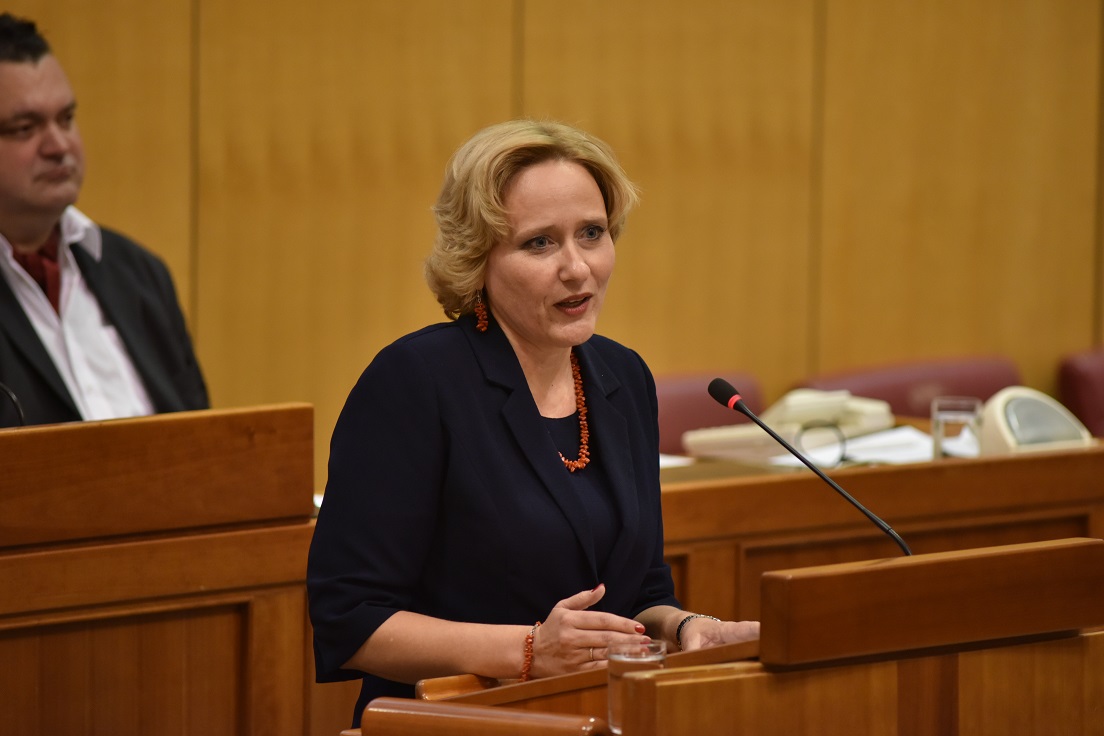
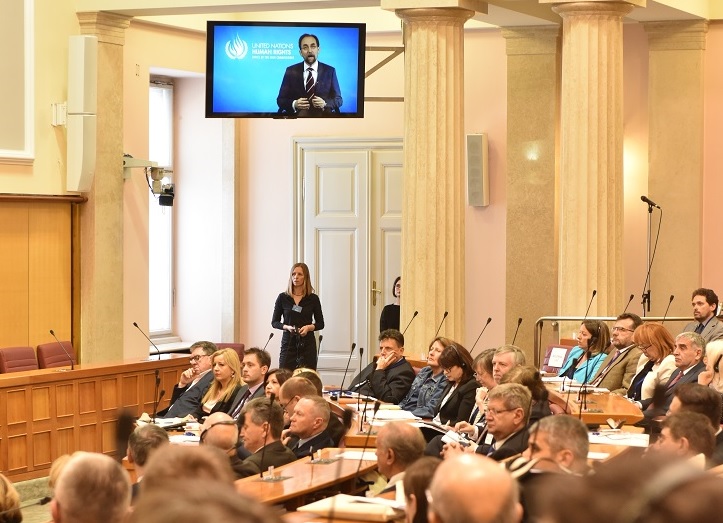
CRC 4404 CopyCRC Zeid


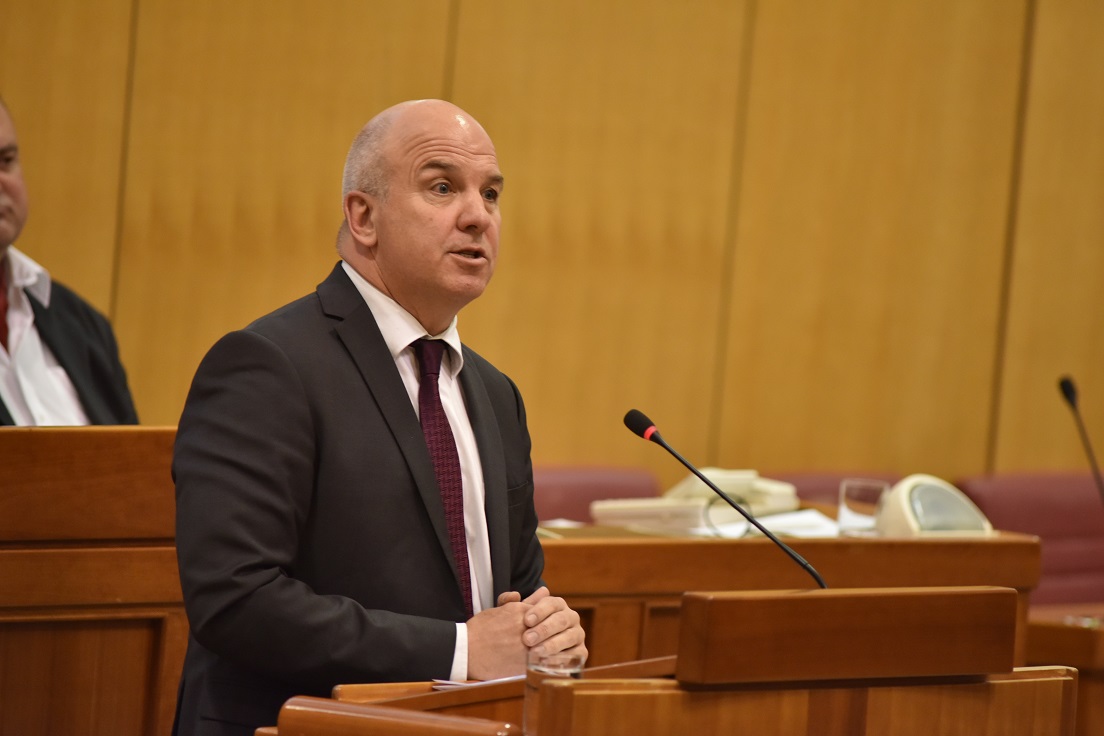
Council of Europe Commissioner for Human Rights Nils Muižnieks emphasised in his introductory speech that the democratic space is a legal and political environment in which pluralistic debate and civic participation can take place. „I have often said that freedom of expression, especially freedom of the media, is foundational, because it is essential to the exercise of many other rights. Limitations to freedom of expression can affect not only the media, but also broader society“, stated the Commissioner.

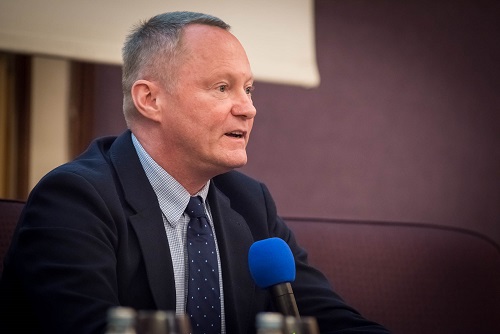
Director of EU Fundamental Rights Agency Michael O’Flaherty, speaking about the fact that human rights are enshrined by law, reminded: "It's not about some voluntary codex, it's not a buffet from which we choose what we want, it is a law and we should demand accountability under that law", stated O’Flaherty.

The programme continued with the discussion on the role of national human rights institutions in strengthening democracy, with the participation of the GANHRI Chair and Head of the German Human Rights Institute Beate Rudolf, IOI President and Ombudsman of Ireland Peter Tyndall, Equinet Chair and Executive Director of the Northern Ireland Equality Commission Evelyn Collins and member of the Croatian parliament Committee for Human Rights and Rights of National Minorities Veljko Kajtazi.

Photographs from the Conference are available here, and video of the first day is available here.

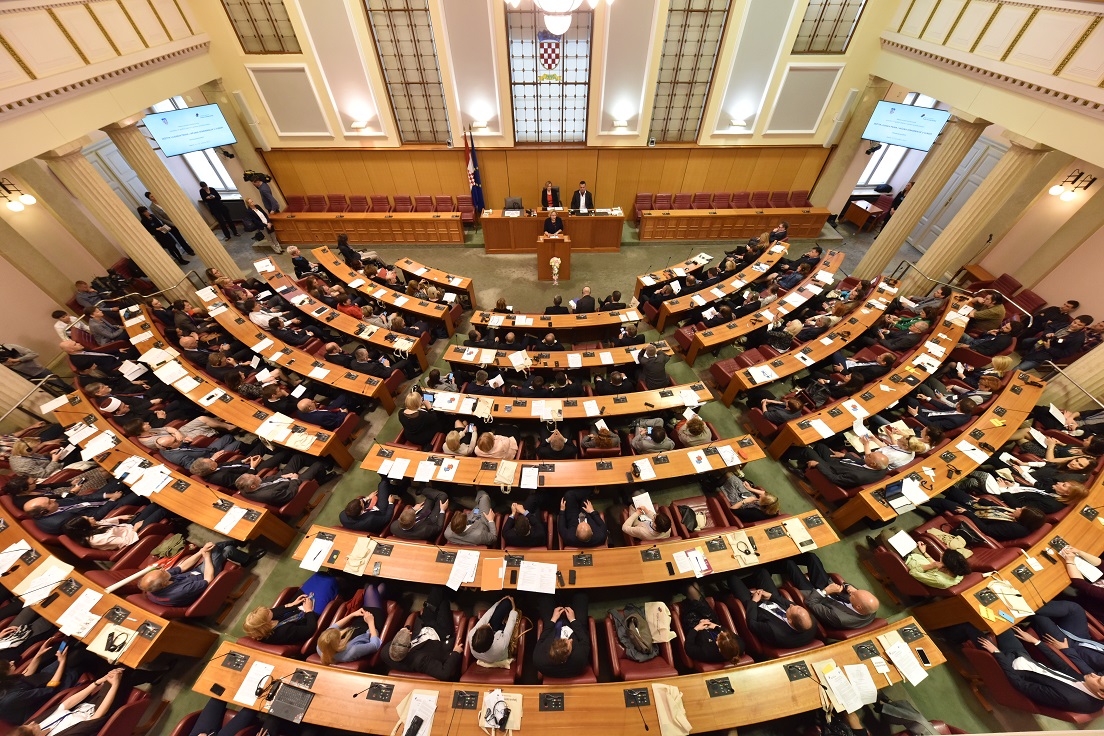
 CRC 4793CRC 4437 CopyCRC 4646 Copy

Read more

Counter-terrorism, freedom of expression and living together in focus of the 2nd day of International conference in Zagreb

Date of article: 15/05/2017

Daily News of: 16/05/2017

Country:  Croatia

Author:

Article language: en

The second day of the high level conference - Reclaiming Human Rights in Europe: How to Enhance Democratic Space? - marking the 25th anniversary of the Croatian ombudsman, started with the discussion on the interrelation of respect for human rights and counter terrorism measures.

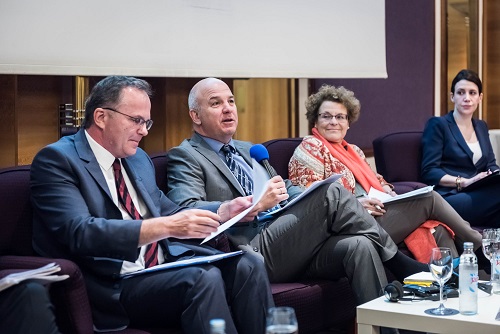
Council of Europe Commissioner for Human Rights Nils Muižnieks, ODIHR Head of Human Rights Department Omer Fisher, Regional Human Rights and Rule of Law Advisor at UNDP Istanbul Regional Hub Isabelle Tschan, representative of the Defender of Rights from France Claudine Jacob, Senior Expert Adviser of the Croatian Council for National Security Office Sara Lustig were the panellists, as well as the Polish Ombudsman Adam Bodnar via the video message.

Fight against terrorism is not a sprint, it’s a marathon, stressed the Commissioner Muižnieks and added that security must not shoulder out human rights. “By curtailing rights we do the terrorists’ work for them”, concluded Muižnieks.

CRC 5661 Copy„There is no need for me to convince you this is one of the most important topics of modern times” said the Ombudsman Bodnar in a video message, adding that in public sphere human rights are often confronted against security, which is used by the states in order to adopt measures to restrict rights and freedoms.

The Conference continued with the discussion on freedom of expression and hate speech, with panellists Director of EU Fundamental Rights Agency (FRA) Michael O'Flaherty, Deputy Ombudswoman Tena Šimonović Einwalter, journalist Imane Rachidi, independent expert and former OSCE Representative for Freedom of the Media Dunja Mijatović and, via the video message, Vice President of the European Parliament Ulrike Lunacek.

CRC 6378 CopyCRC 6559 CopyCRC 6503 Copy


“The art of critical thinking and accepting criticism is essential for democracy”, noted Lunaček, saying that these skills should be taught in families, schools as well as in trainings for journalist, as well as accepted by politicians. Deputy Ombudswoman Šimonović Einwalter said that „we need to be able to discuss and debate, but also be critical of hate speech, since not dealing with it only causes more discrimination and more hate crime”. Deputy Šimonović Einwalter emphasised the role of judges and their awareness of the jurisprudence of the European Court of Human Rights.

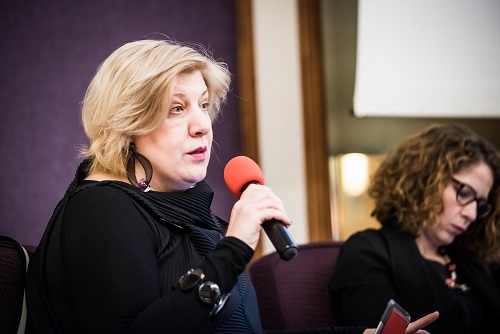
FRA Director O'Flaherty stressed that pressure on the media is not a one-state story, it is present accross 28 EU members. Journalist Rachidi, who has on several occasions received serious death threats talked about her experiences. “The hard part of threats is lack of support from politicians” highlighted Rachidi. Dunja Mijatović called for common action in defending freedom of expression and the media emphasising that threats against journalists' security means threats against the security of their families. “We have to be more vigilant and blunt to stand up for human rights, and safeguarding freedom of expression”, emphasised Mijatović.


GANHRI Chair and Director of German Institute for Human Rights Beate Rudolf, Ombudsman B&H Jasminka Džumhur, member of the Croatian Parliament Veljko Kajtazi and Julija Kranjec from the Centre for Peace Studies spoke on the ways of living together in communities composed of different societal groups.            

At the end of the Conference, national human rights institutions, ombuds and equality bodies from almost 30 countries signed Zagreb Declaration, reaffirming their strong commitment to the protection and promotion of human rights and equality, the fight against all forms of discrimination, and to the cooperation with stakeholders on all levels.

The Ombudswoman Lora Vidović closed the Conference by thanking participants for their contribution in discussions during the past two days and for joining the celebration of the 25th anniversary of the Ombudsman institution in Croatia. 

You can find photos of the Conference here and information on the first day here.

Read more

Starker Zusammenhalt für Menschenrechte

Date of article: 16/05/2017

Daily News of: 16/05/2017

Country:  Austria

Author:

Article language: de

Menschenrechte, Terrorismus-Bekämpfung, Meinungsfreiheit und Zusammenleben – die internationale Konferenz, die vergangene Woche in Zagreb stattfand, widmete sich den brennenden Themen unserer Zeit. Anlass für die Konferenz war der 25. Geburtstag der kroatischen Ombudseinrichtung – das kroatische Pendant zur Volksanwaltschaft in Österreich.

Volksanwalt Günther Kräuter gratulierte der kroatischen Amtskollegin Lora Vidović in seiner Funktion als Generalsekretär des „International Ombudsman Institute“ und moderierte den Tagesordnungspunkt zum Thema Terrorismus-Bekämpfung und Menschenrechte. Als österreichische Vertreterin nahm auch Volksanwältin Gertrude Brinek an der Konferenz teil. Ombudsfrau Lora Vidović begrüßte in Zagreb mehr als 50 Vertreterinnen und Vertreter von Menschenrechtsorganisationen und Ombudsstellen sowie zahlreiche weitere Gäste aus ganz Europa.

Im Rahmen der Konferenz mit dem Titel "Reclaiming human rights in Europe: How to enhance the democratic space?" diskutierten die Teilnehmenden auch die Rolle von Menschenrechts-Organisationen und Ombudseinrichtungen, wenn es um den Schutz von Demokratie und Rechtsstaatlichkeit geht.

Volksanwalt Kräuter: „Angesichts der vielen Herausforderungen vor denen Europa steht, bot die Konferenz eine willkommene Gelegenheit zum Austausch und zur stärkeren Vernetzung zwischen den Einrichtungen.“ Michael O’Flaherty von der Grundrechteagentur der Europäischen Union betonte ebenso wie Kräuter die Wichtigkeit von unabhängigen Ombudseinrichtungen. Peter Tyndall, Präsident des International Ombudsman Institute ging in seiner vielbeachteten Rede auf die Aufgaben von Ombudseinrichtungen und auf die Versuche ein, ihre Kompetenzen zu beschneiden. Bei Druck und Repressionen von staatlicher Seite, müssten die Einrichtungen zusammenhalten und sich gegenseitig unterstützen, waren sich die Kongress-Teilnehmer einig. Wörter und Kommunikation seien die stärksten Mittel von Menschenrechtsorganisationen und Ombudsstellen, unterstrich Nils Muižnieks, Menschenrechtskommissar des Europarats.

Kräuter ergänzt: „ Wir wollen den Menschen künftig zudem noch stärker vermitteln, dass Menschenrechte jeden von uns betreffen, auch in Österreich.“


Read more