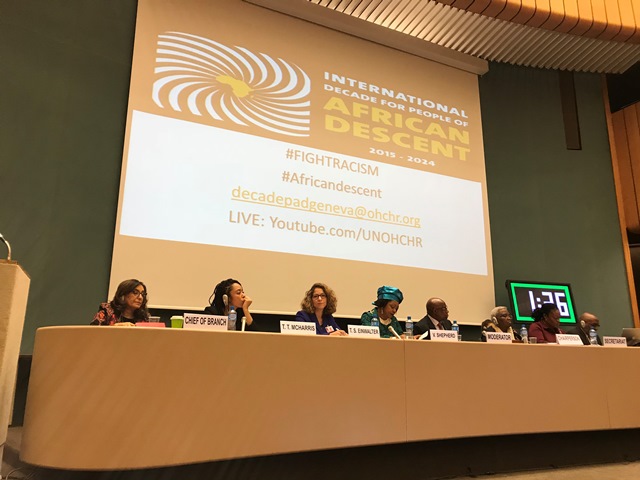
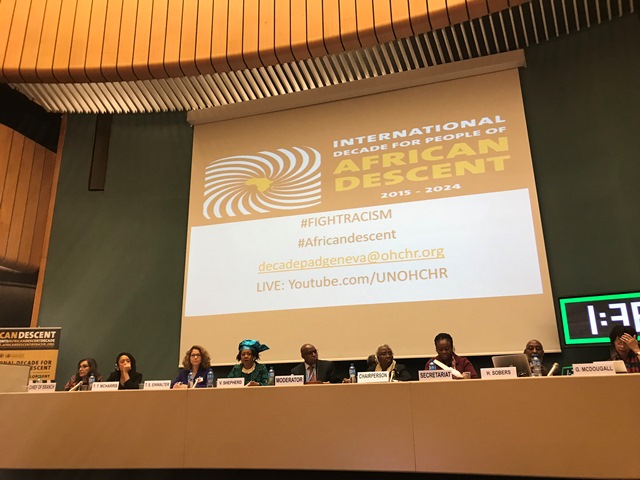
The Congress, organized by the Commissioner for Human Rights to celebrate the 30th anniversary of the institution of independent ombudsman in Poland consists of 36 panels on key topics relating to human rights in our country.
Panel of Polish Commissioners for Human Rights: the past, present and future
The panel will focus on the history of the Office and the CHR’s current role in a democratic state based on the rule of law. It will be a picture of human rights in Poland over the last 30 years and, consequently, a picture of social problems reflected in citizens’ complaints. The objective of the panel is to develop solutions allowing for more effective protection of civil rights in our country.
Current international challenges in the protection of civil rights
Economic crisis, terrorism and growing radicalism result in insecurity and uncertainty among societies. An individual is subjected to the increasing pressure accompanied by the conviction that the protection of his or her rights is insufficient, both in the national and international level. The question arises whether existing instruments of international law pertaining to the protection of human rights, democracy and rule of law are sufficiently effective and whether the standards of human rights protection in a vacuum. Those questions refer also to the individual’s rights protection in the national regime, and therefore whether the state fully realises international standards of human rights protection and whether legal measures and institutions created within state successfully defend individual’s rights. To find this out we do need the smooth functioning of the monitoring system of the international legal obligations and ensuring cohesion of the activities of international organisations dealing with human rights.
Human rights as seen from the perspectives of different generations
Human rights are universal in nature. However, their understanding and application are subject to change over time and depend on numerous political, economic, social and generational factors. Each generation contributes to this idea, learns how to protect it and, at the same time, adds new values to it.
How to teach about human rights in the world of swinging emotions and values?
Human rights are of great importance in international relations. However, they are equally important in interpersonal relations as they apply to each of us. In the constantly changing reality, in particular in the field of methods of communication, education at every stage of human life is essential. What methods and what language should be used to convey the values that are important for each of us? How to determine a common system of values? Consensus, authorities, any other method? Is the knowledge we obtained years ago sufficient to choose between good and bad, in particular when our choices concern other people, minorities or those who are weaker? What should we do when we see other people being harmed, and when we see human rights violated?
What human rights are missing from the Polish Constitution?
Should the catalogue of rights and freedoms laid down in the Constitution of the Republic of Poland be extended? If yes, what further rights or freedoms deserve to be guaranteed by the Constitution?
Courts - debtors to citizens
What changes are needed in the Polish system of justice?
Civil rights in the media. What information to convey and how?
The significance of post-truth and tabloidization. The role of intervention programmes. The development of blogosphere and social media.
Woman as an (un)truly full*citizen/ *delete as appropriate
Where are we in Poland when it comes to the implementation of women’s rights? In what areas are women’s rights most severely violated? What has to change: the law or the practice? These issues are going to be addressed from different perspectives: that of human rights and the equality body; that of the government, and that of experiences of employers, practitioners and lawyers.
The dark side of the integration: problems of Polish citizens living abroad
What is the situation of Polish homeless persons abroad? Are they sufficiently protected against discrimination and xenophobia? What are the consequences of such situations for family life (divorces, Euro-orphans, child maintenance payments, judicial cooperation)? Do consular services fulfil their role? Is the cooperation in criminal and civil matters appropriate?
Work, freedom and solidarity: dilemmas of (semi)peripheral societies
The panel will seek to answer the question about the social origins of the discrepancy between the theory of social human rights and the principle of social solidarity, and the practice of work-related interpersonal relations.
Hasn’t the word “solidarity” become a symbol of workers standing united against something or against someone, rather than a word representing the essence of being a community of us all for everyone’s sake?
Does the problem concern only social practice, or are problems with “solidarity” faced also by elite scientists?
Do we understand the essence and potential of “solidarity” as a pre-condition for the implementation of social rights?
Pro bono legal aid as a solution supplementing the existing legal aid system
The purpose of the panel is to enable exchange of experience among various institutions providing legal aid to citizens: the CHR office, representatives of other ombudsman institutions, law clinics and professional associations. The panel will also reflect on the amendments to the Act on Free Legal Aid.
Tenants’ rights: protected sufficiently, or too much?
The aim of the panel is to reflect on whether, in Poland, there is an actual balance between the protection of ownership rights and the protection of tenants’ rights. For many years, the jurisprudence of the Constitutional Tribunal emphasized the necessity to balance the rights of the two groups of citizens: apartment owners as well as tenants, which led to the reduction of the scope of tenants’ protection. This caused, in particular, an increase of rents and made tenancy relationships more permanent in order to ensure more effective implementation of owners’ rights. On the other hand, the Tribunal has never changed its opinion that eviction from an apartment without providing actual protection against homelessness constitutes a violation of human dignity and is thus not acceptable. Recently, however, more and more voices are heard that the rights of tenants, perceived, in particular, from the point of harmful actions of so-called “entities emptying buildings”, are protected too strongly which, in extreme cases, may make it impossible for the owners to dispose of their properties. Perhaps it is worth resuming the discussion on the need to ensure a proper balance in the protection of the rights of both groups of citizens, particularly in the context of the drafted major amendment to the Act on the Protection of Tenants’ Rights.
Is it possible to fully eliminate torture in Poland?
The purpose of the panel is to consider whether Poland can fully eliminate all cases of torture. What solutions should be adopted in this regard? The panellists will focus on the significance of the right to lawyer, the right to full-scope medical examination, the right to notify a close person of being deprived of liberty, and the right to file complains. The mechanisms of liability for damage will also be discussed.
Contemporary bioethical challenges in the context of modern technological developments
The panel will aim to address human rights-related challenges in the context of the development of medical technologies. The discussed topics will include issues of human being improvement (CRISPR-Cas editing), NBIC convergence (nanotechnology, biology, information technology and cognitive science) or personalized medicine. The speakers will consider whether, in the context of the progress in medical technology, it is necessary to formulate new human rights.
The situation of persons with intellectual or mental disabilities, held in penitentiary institutions
The purpose of the panel will be to present the results of a research project implemented by the CHR Office staff. The project concerned persons with intellectual or mental disabilities, who are deprived of their liberty in prisons or pre-trial detention centers. Main system-related problems in this area will be discussed.
Aging at home- a right of senior persons and a responsibility of local communities
Older persons have the right to make decisions regarding their lives and to be included in the society. They may choose to live in their usual place of residence despite the limitations arising from their senior age. They need adequate, flexible and coordinated support. Thanks to the model of support provision to senior persons in their local community, this aim may be achieved.
The catalogue of key values constituting the model’s axiological framework includes: dignity, individuality, freedom of choice, freedom of expression of one’s will (preferred choices) and opinions, social justice, equality (understood as a term opposite to discrimination) and solidarity.
The model describes individual implementation areas as well as examples of activities needed to implement it. It also determines the preconditions for its successful implementation.
The Committee invited experts in public service planning to work together with selected local governments to develop model tools for implementing the model into local practice. During the panel, to-date experience in its operation will be presented.
The principle of equal treatment in horizontal relations
The discussed topics will include: the scope of protection granted under Article 32 of the Constitution of the Republic of Poland, the boundaries of freedom of conscience and of economic freedom, the possibility of applying the so-called conscience clause by privately owned service providers, the scope of positive obligations of entrepreneurs and legal protection measures.
Mental health protection in Poland
The aim of the panel is to analyse the current challenges in the protection of mental health in the context of the findings of the Mental Health Congress held in May 2017. Activities to be taken by the CHR in the next 3 years in office will be discussed.
Environmental protection: participation, consultations, procedures
The panellists will analyse the EC and international regulations that provide the possibilities of real participation of social organizations and of challenging environmental decisions. Such participation is of key importance for the protection of the environment and the interest of the society, which should not be expressed as individual interest. The participants will refer to important cases in which the CHR was engaged, e.g. the case regarding the forest management procedures and the amendment of the parliamentary act on the protection of nature.
Procedural safeguards for defendants, and respecting the principle of equality of arms in the procedural model adopted in the amended Code of Criminal Procedure
The purpose of the panel is to analyse current procedural safeguards available to defendants as well as their access to legal aid in the light of the amended Code of Criminal Procedure. The panellists will focus on the significance of the principle of equality of arms in the criminal procedure model adopted after the amendment of the Code of Criminal Procedure, as well as related risks and consequences. The participants will also try to determine the position of the defendant and the prosecutor after the amendments, the related threats to fair trial, to the right to defence and to access to court, and will try to answer whether the principle of equality of arms may, in certain cases, be subject to restrictions.
Adjustment disorders and posttraumatic stress syndrome in uniformed services
The panel will focus on adjustment disorders and posttraumatic stress syndrome in uniformed services (army, police, fire brigades). Stress accumulation, alcohol abuse, domestic violence, debriefing procedures, stereotypes. Cooperation with organizations of soldiers and officers (in particular, veterans), as well as organizations and institutions providing therapies to persons in crisis (e.g. the Clinic of Psychiatry and Combat Stress of the Military Institute of Medicine).
Retirement pension insurance: in search for a balance between the possibilities of the state and the interests of insured persons
Poland is going to get old before it gets rich. Demographic processes will, in the coming years, lead both to the reduction of retirement pensions’ value and to the possibility to finance the growing expenditures on the pensions. At the same time, the introduction of a number of changes in the pension system over the past several years, and the subsequent withdrawal from some of those changes has resulted in citizens’ reduced trust to the pension system. There is a tension between the state’s ability to guarantee decent pensions, and the related burden on the state budget and the tax burden on working persons. In the panel, we will look at changes that are needed in the pension system to solve the problems. What should be the role of the general pension system, and the role of the so-called third pillar insurance. What actions are needed so that the increased duration of professional career can be accompanied by increased income, pensions and longer healthy life?
Incapacitation: to be reformed, or to be abolished? On the need to introduce assisted decision-making
Persons with intellectual disabilities have the right to make decisions regarding their lives. The condition for autonomous decision-making is that a given person has legal capacity. In accordance with the United Nations Convention on the Rights of Persons with Disabilities, ratified by and binding for Poland, the state is under the obligation to ensure, to persons in need, support measures in exercising their legal capacity. However, in Poland, the only solution concerning limited legal capacity, used in relation to persons with intellectual or mental disability, is the institution of legal incapacitation. Despite numerous judgments of the European Court of Human Rights, and the positions of the Committee on the Rights of Persons with Disabilities and of leading international organizations, the form of legal incapacitation used in Poland dates back to 1960s. Why is it so difficult to change this solution? Is legal incapacitation a support measure? How to introduce a system of supported decision-making in Poland? These matters will be discussed in the panel which will summarize the discussion ongoing in Poland for many years on the need to change the system of legal incapacitation.
Victims of torture in guarded centres for migrants in Poland
Persons who have suffered torture outside our country are subject to the process of secondary victimization while remaining in guarded centres for migrants.
Directive on the police - a chance for citizens or a piece of legislation without effect?
The discussion on opportunities and threats relating to the use of data analysis for political purposes deserves serious and specialist approach – without over-simplifications and demagogy, but rather based on available research results and actual market practices. The session, prepared by the Panoptykon foundation, will present a summary of available research results, will ask questions not answered until now and propose solutions that are worth discussing.
The purpose of such a panel would be, on the one hand, to inform the on-going public debate and, on the other hand, to initiate our community’s discussion on specific regulatory solutions and educational activities.
Self-help movement of persons who have experienced mental crisis
The panel will present activities of two self-help centres: in Warsaw and in the Pomorskie Voivodeship. It will also describe the impact of the workshop, organized in the CHR Office for persons who have experienced mental crisis, on the development of the movement. Participants of the workshop are active members of the movement and will take part in the Congress.
Poland’s migration policy at the time of crisis
Migration policy objectives in the context of refugee migration; the principle of solidarity in EU migration policy; the economic approach to migration in the context of human rights and freedoms.
Patient’s informed consent to a medical procedure
Adjusting the consent document form to the specificity of medical procedure and related risks; blank consent forms; patients’ “donations” required to undergo specific medical procedures.
Immediate application of the Constitution in the sphere of criminal law
The aim of the panel is to carry out a dogmatic analysis of permissibility of direct application of the Polish Constitution in criminal cases, in the event of specific problems, in particular in the context of recent legislative changes. During the panel the following topics will be discussed: admissibility of evidence obtained in violation of law, extended confiscation, possibility to challenge a judgment on body exhumation, permissibility and principles of operational control. The arguments presented during the discussion should assist judges, prosecutors and professional proxies in specific cases pending before the courts. The panel also seeks to identify possible difficulties and limitations in the area of direct application of the Polish Constitution.
How to teach about the Constitution and civil rights?
The Act on retirement benefits for persons serving in the state uniformed services and intelligence services under the former political system – social justice or repression?
Decrease of retirement pensions of officers who served the system of the former People’s Republic of Poland. The panel will provide an opportunity to present positions of persons who took part in the political system transformation and in establishing the uniform services of the democratic state. The discussion will be based on arguments for cutting retirement pensions for members of the former state security services of the People’s Republic of Poland, as well as arguments against it; arguments for and against the new regulations’ compliance with the Constitution will also be discussed. The CHR’s activities in this area will also be presented (the first appeals should soon be filed with courts), and to present stories of persons who were in service after 1990.
Measures required for equal treatment. Current challenges. Building alliances with professional associations of lawyers
The panel will present challenges currently faced by social organizations against discrimination: physical attacks on their offices and activists, media attacks, general deterioration of the climate around the subject of equal treatment, impeded cooperation with public administration, the state’s engagement (through prosecutors) in proceedings conducted by such organizations, an increased number of reported cases. The discussion with the panelists will seek to identify areas of interest, resources and competences common for anti-discrimination organizations and the lawyers’ community, as well as good practices in the field of their cooperation. It will also explain what the two communities can offer to each other, so that the cooperation is not single-sided (lawyers for the organizations only). Options for strengthening the ties between the organizations and the lawyer’s community (including possible institutional arrangements within lawyers’ professional associations) , as well as challenges in such cooperation, will also be presented.
Hospitality, or the host and the guest in view of civil rights
Christians and human rights - 40 years later
European Convention on Human Rights in in citizens’ hands
European Convention on Human Rights is often perceived as “Law of the last resort”. Serious infringements of law and institutional dysfunctions in Poland cause a massive influx of complaints addressed to The European Court of Human Rights. The above mentioned situation significantly influences effectiveness of his actions. National law regime and European Convention on Human Rights are the so-called communicating vessels. Is therefore an individual complaint an effective instrument in citizens’ hands? Does the jurisdiction of European Court of Human Rights improve their situation? Finally, do changes pertaining to the improvement of the European Court’s actions effectiveness influence the individual’s accessibility to the European judiciary?



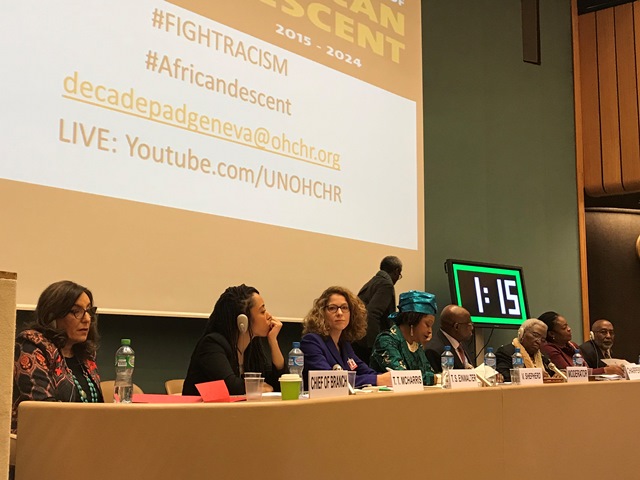 One of the panellists at the second day meeting was Tena Šimonović Einwalter, Deputy Ombudswoman and the Chair of the European network of equality bodies (Equinet).