
Maja Kević Elected Deputy Ombudswoman

Date of article: 31/03/2017

Daily News of: 03/04/2017

Country:  Croatia

Author:

Article language: en

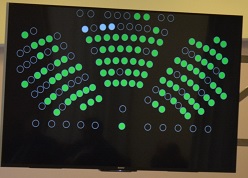
Croatian Parliament elected Maja Kević as Deputy Ombudswoman at the March 31 2017 voting session.

Deputy Kević is joining the Office of the Ombudswoman Lora Vidović after working at the Croatian Government's Office for Human Rights and Rights of National Minorities. Her experience, high motivation and sensibility towards human rights will cotribute to further strenghtening the work of the institution, especially regarding persons deprived of their liberty and the mandate of the National preventive mechanism.

The Law on the Ombudsman regulates the apointment of at least three deputies.

Deputies Lidija Lukina Kezić and Tena Šimonović Einwalter have been appointed in 2013. 

GlasovanjeMaja Kević prisega

Read more

Ombudsman and Ombudsman for Children can now investigate complaints from those in Direct Provision

Date of article: 30/03/2017

Daily News of: 03/04/2017

Country:  Ireland

Author:

Article language: en

Direct Provision Picture

L-R Minister of State David Stanton, Tanaiste Frances Fitzgerald, Ombudsman for Children Niall Muldoon, Ombudsman Peter Tyndall

From Monday 3 April the Ombudsman’s Office will be accepting complaints from people living in Direct Provision, while complaints from children or on behalf of children, can be made to the Ombudsman for Children’s Office. This is a change that has been long called for by both Offices, and which will provide equal access to complaints procedures for people in Direct Provision.

Until now residents in direct provision centres could complain to the Reception and Integration Agency, a body of the Department of Justice and Equality. Now residents who have raised an issue with the manager of the accommodation centre, and the Reception and Integration Agency, and who are not satisfied with the outcome, will be able to make a complaint to the Ombudsman or the Ombudsman for Children.

Ombudsman Peter Tyndall said:

“The direct provision system has rightly been criticised both nationally and internationally.  While the government will shortly implement a more streamlined system for asylum applications those still living in direct provision accommodation should receive all the services to which they are entitled.  Introducing an independent complaints process will help to ensure that those services are delivered to the highest standard possible.  My staff have already met with residents across the country and they very much welcome this development”

Ombudsman for Children, Dr Niall Muldoon, who will be able to investigate complaints about children and young people under 18, said:

“Children in Direct Provision will now have equal access to the Ombudsman for Children’s Office. This will enable my Office to make a constructive contribution to the overall welfare of children living in Direct Provision accommodation. Young people in Direct Provision can now be assured that there is a safe, secure and independent place they can come to make a complaint.”

Both Ombudsmen acknowledged the co-operation of Tánaiste and Minister for Justice and Equality, Frances Fitzgerald, and her officials, in bringing about the extension of jurisdiction.

The Ombudsman and the Ombudsman for Children have a Memorandum of Understanding in place to ensure an effective service for those making complaints.  Complaints can be made about services provided by direct provision centres such as:

  • standards of accommodation
  • meals
  • cleaning
  • facilities


Residents in direct provision, like everyone else in Ireland, can also now raise issues relating to the actions of public bodies including schools, health services, social work services, local authorities, government departments and agencies.

Neither Ombudsman will be able to examine decisions about:

  • asylum
  • citizenship
  • residency
  • visas


The Office of the Ombudsman has produced a ‘Factsheet’ for residents explaining how to complain.  During March 2017 staff from the Office of the Ombudsman met with residents from a number of centres across the country and other stakeholders to explain the Ombudsman’s role.  The Ombudsman has also published resource materials for direct provision centre managers including advice on setting up a Model Complaints Procedure.    Joint briefing sessions by both Ombudsman Offices were held for all 33 accommodation centre managers, and RIA and Department of Justice staff.  All the information is available on the websites at www.ombudsman.ie and www.oco.ie.

Read more

Le Défenseur des droits à Barcelone

Date of article: 03/04/2017

Daily News of: 03/04/2017

Country:  France

Author:

Article language: fr

Le Défenseur des droits se rend aujourd’hui à Barcelone à l’occasion du séminaire « Populisme ? Régression des droits et le rôle de l’ombudsman » ; séminaire auquel participent également les médiateurs : Peter Tyndall (Irlande), Soledad Becerril (Espagne) et Rafael Ribó (Catalogne). Cet échange entend établir un état des lieux des menaces pouvant peser sur les droits et libertés et proposer des actions communes fondées sur une coordination européenne.

Read more

Publication de l’étude « Des pratiques médicales et dentaires, entre différenciation et discrimination »

Date of article: 03/04/2017

Daily News of: 03/04/2017

Country:  France

Author:

Article language: fr

Le Défenseur des droits et le Fonds CMU ont initié une étude sur « les pratiques médicales et dentaires, entre différenciation et discrimination. Une analyse de discours de médecins et dentistes » réalisée par Caroline DESPRES et Pierre LOMBRAIL du laboratoire LEPS de l'université Paris XIII.

Cette étude qualitative réalisée en 2016 a permis de recueillir le point de vue de professionnel·le·s de santé (médecins généralistes, spécialistes et dentiste) exerçant dans des cabinets libéraux sur la prise en charge des patient·e·s vivant dans des conditions de précarité, notamment celles et ceux se situant en dessous des seuils de pauvreté et qui sont éligibles à la CMU-C, l'ACS ou encore l'AME.

L'étude a permis d'interroger différentes dimensions : la prise en compte de la précarité dans l'accueil et la délivrance des soins, les motifs avancés par les praticien·ne·s pour refuser de recevoir des patient·e·s du fait qu'elles/ils sont bénéficiaires d'une protection sociale complémentaire, les différences de soins proposés aux patient·e·s.

Les analyses ont mis en évidence la construction de catégorie de patient·e·s dont la catégorie des « patients CMUC » qui est largement prédominante dans le discours des médecins et dentistes. Le bénéfice de la CMU-C, de l'ACS ou de l'AME étant subordonné à des conditions de ressources, certain·e·s praticien·ne·s s'appuient sur ces conditions pour distinguer ces patient·e·s des autres.

Dès 2014, le Défenseur des droits a publié un rapport sur les refus de soins opposés aux bénéficiaires de la CMUC, de l'ACS et de l'AME. Depuis, de nouvelles saisines de l'institution sont venues signaler régulièrement des pratiques de sélection de la patientèle de la part de certain·e·s praticien·ne·s. Des pratiques qui se traduisent par des refus de soins illégaux de certaines personnes du fait qu'elles sont bénéficiaires de la CMUC, de l'ACS ou de l'AME. En décembre 2016, le Défenseur des droits a ainsi ouvert plusieurs enquêtes suite à des informations mentionnées sur des sites Internet concernant les pratiques de certains médecins n'acceptant pas les bénéficiaires de la CMU ou de l'AME. Début janvier 2017, des associations ont saisi l'Institution pour des refus de prise de rendez-vous sur un site Internet en ligne pour des patient·e·s bénéficiant de la CMUC.


Read more