
Migrants’ right to information and family reunification

Date of article: 20/10/2017

Daily News of: 24/10/2017

Country:  Croatia

Author:

Article language: en

Migrants must be informed about their rights in order to be able to use them and seek protection if they are not respected. In practice, however, this is often not the case, as showed the report “*Migrants’ right to information: from key findings to evidence-based recommendations for policy makers”, which ENNHRI presented on 17th October in the European parliament in Brussels.

The report includes the practice from 19 reception centres and centres for migrant’s detention in 12 European countries, based on data gathered by national institutions for human rights, among others, from the Office of the Croatian Ombudswoman. The hosting presenters at the Parliament were the MPs Tanja Fajon, Ana Gomes and Judith Sargantini.

 „Our institutions provide expert, independent and credible information on implementation of human rights standards at the national level, This enables ENNHRI to provide an overview of human rights concerns that can lead to action at the regional level which can have impact on the enjoyment of human rights across Europe”, said Ombudswoman and ENNHRI Chair Lora Vidović in the opening speech.
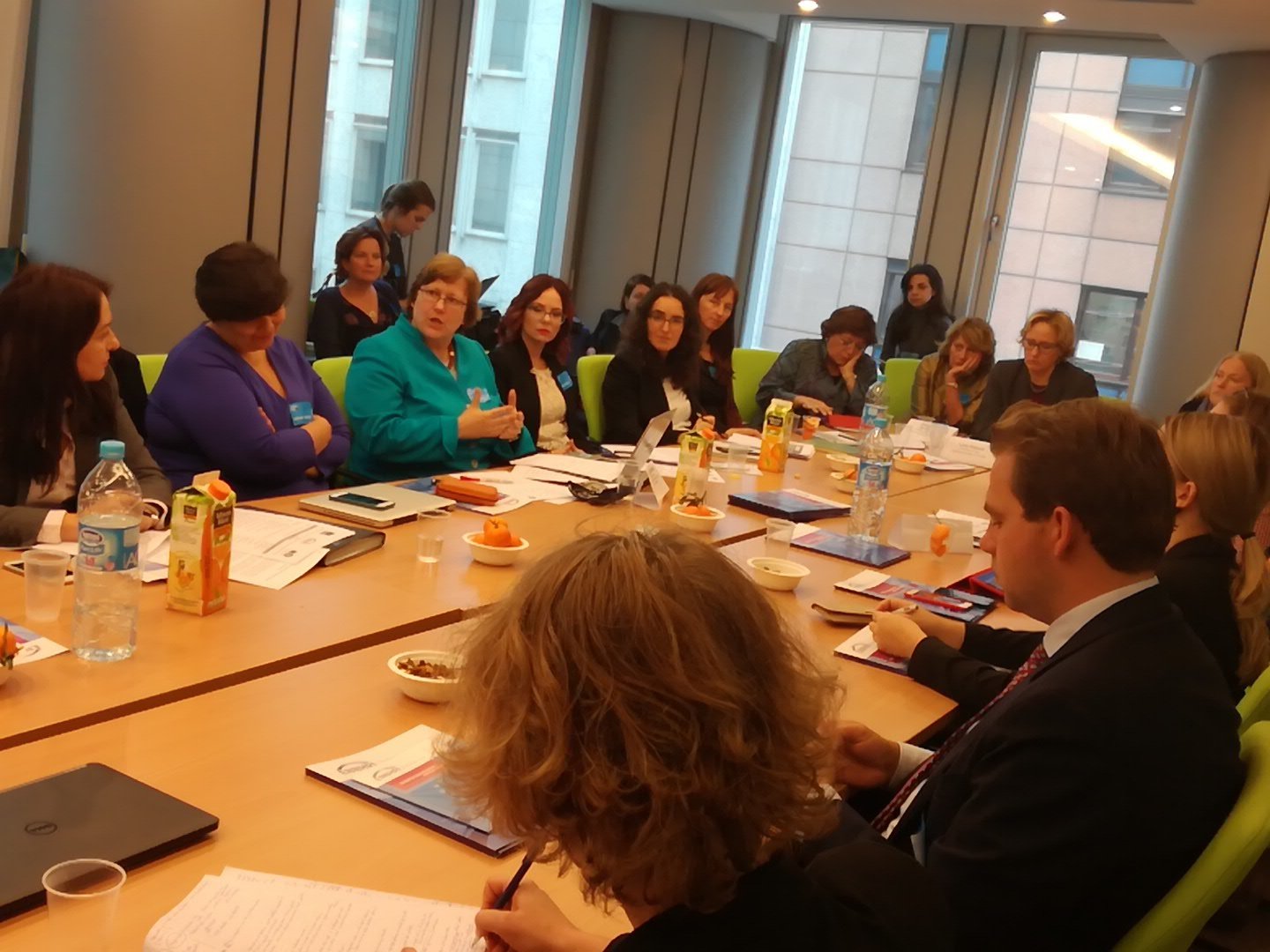
beataAdriana van Dooijeweert, ENNHRI Asylum and Migration Working Group Chair and President of the Netherlands Institute for Human Rights, presented the details from the report showing few problematic areas - short duration of the intake interviews, poor quality of translation and lack of educated staff. Namely, it is necessary that the intake interview is not limited to one hour, and its duration should be extended in the case of children. It is also necessary to provide access to professional translation/interpretation  during  the  interview. Persons providing information to migrants on their rights should be trained thereof as well as the quality of their work regularly monitored, since information   provided   to   the   migrants   is   often   outdated,  inaccurate  or  incomplete. It is also necessary for migrants to have access to free legal assistance, recommended ENNHRI in this report.   


Obstacles for family reunifications was under the spotlight of the meeting of ENNHRI members with the Council of Europe Commissioner for Human Rights Nils Muižnieks on 18th October also in Brussels. “Family reunification is the first step towards refugee integration and if denied, it encourages the illegal ones. In spite of that, many countries are creative in making obstacles against the successful procedure”, warned Muižnieks, who has just released the special report on this topic.

„Unfortunately, the European answer to the migration crisis more often includes restrictive measures, with negative effects to the migrants’ status, and especially family reunification procedure”, emphasised Ombudswoman Vidović. Participants also highlighted the need for national human rights institutions and international organisations to continue cooperating in advocacy for necessary changes in practice and legislation in the asylum and migration policies, including issues regarding family reunification. 

Migrants ENNHRI 2017DMZ5hPDXcAANJaN


*The term "migrant" in this report includes asylum seekers, refugees, stateless persons, migrants and persons in need of international protection

Read more

Masern: Ärzte für verpflichtenden Schutz

Date of article: 23/10/2017

Daily News of: 24/10/2017

Country:  Austria

Author:

Article language: de

Volksanwalt Kräuter fordert einen verpflichtenden Impfschutz gegen Masern an Kindergärten und Schulen. Viel Zustimmung erhielt er am Impftag in Graz.

Masern sind keine harmlose Kinderkrankheit, das machte Prof. Werner Zenz von der Pädiatrie der Uniklinik Graz im Rahmen des 8. Impftages eindringlich klar. Im Jänner 2017 sei ein mit Masern infiziertes Kind in der Kinderklinik behandelt worden. „Alle nicht geimpften Kinder auf der Station wurden angesteckt“, berichtete Zenz von der hohen Ansteckungsgefahr. Die betroffenen Kinder waren noch kein Jahr alt und konnten daher nicht geimpft werden. Zenz zeigte auch Bilder von Kindern, die an Masern gestorben sind – 15 hat er in den vergangenen 20 Jahren gezählt.

Die darauffolgende Podiumsdiskussion drehte sich um das Thema Impfpflicht. Sollte die Masernimpfung Pflicht sein? Wenn ja, für wen? Viel Einigkeit bestand unter den anwesenden Ärztinnen und Ärzten betreffend eine Impfpflicht für Gesundheitspersonal. Italien führte kürzlich eine allgemeine Impfpflicht mit brachialen Mitteln ein: Eltern, die ihre Kinder nicht impfen lassen, drohen hohe Bußgelder und im Extremfall sogar der Entzug der Obsorge.

In Österreich seien solch drastische Maßnahmen freilich nicht angebracht, erklärte Kräuter: „Sinnvoll wäre vielmehr eine Steuerung über staatliche Zuwendungen. Bei den Pflichtuntersuchungen im Rahmen des Mutter-Kind-Passes hat sich dieses System längst bewährt.“ Während Prof. Johannes Liese von der Uni Würzburg stattdessen auf die Vernunft der Patientinnen und Patienten setzen will, kann sich auch Prof. Zenz eine Impfpflicht vorstellen: „Nur gutes Zureden wird nicht reichen.“

Volksanwalt Kräuter und er betonten auch die solidarische Verpflichtung: „Nur bei einer Durchimpfungsrate ab 95 Prozent sind auch Menschen geschützt, die nicht geimpft werden können – wie Säuglinge, Krebspatienten oder hochbetagte Menschen“, so Kräuter.


Read more

El Síndic abre una actuación después de recibir quejas, en todos los sentidos, relacionados con el pluralismo ideológico en los centros educativos

Date of article: 24/10/2017

Daily News of: 24/10/2017

Country:  Spain - Catalonia

Author:

Article language: es

Se han registrado denuncias de docentes por diversas declaraciones de cargos públicos que cuestionan la falta de pluralismo

También se han recibido reclamaciones por el trato en algunas escuelas de los hechos del 1-O y de la actualidad política

El Síndic de Greuges de Cataluña ha decidido abrir una actuación de oficio y solicitar información al Departamento de Enseñanza en relación con el trato que se da en los centros educativos a la situación política actual. La actuación se ha abierto tras haber recibido diversas quejas en todos los sentidos. Así, el Síndic ha recibido quejas y consultas referidas a una presunta falta de imparcialidad de algunos centros educativos en el tratamiento de los hechos del pasado día 1 de octubre y de la situación política actual.

También ha recibido quejas de docentes en desacuerdo con el contenido de ciertas declaraciones de cargos públicos e informaciones aparecidas en los medios de comunicación en que se cuestiona la falta de pluralismo en las escuelas y en general en el sistema educativo, al cual se atribuye una voluntad de adoctrinamiento del alumnado.

En este sentido, el Síndic recuerda que deben respetarse los derechos de participación y la libertad de expresión y de pensamiento de los niños. La capacitación para ejercer la ciudadanía y la formación integral de las capacidades del alumnado son principios rectores del sistema educativo. Los centros docentes no pueden permanecer aislados del entorno y los niños y adolescentes tienen derecho a recibir información y formación, a participar, a reunirse y ha hacer huelga.

También añade que la Ley 7/2009, del 10 de julio, de educación, reconoce entre otros principios rectores del sistema educativo el pluralismo, la inclusión escolar, la cohesión social, y la exclusión de cualquier tipo de proselitismo o adoctrinamiento.

Read more

El Defensor del Pueblo recomienda aplicar un IVA reducido a la electricidad por ser un bien esencial

Date of article: 24/10/2017

Daily News of: 24/10/2017

Country:  Spain

Author:

Article language: es

El Defensor del Pueblo (e.f.), Francisco Fernández Marugán, ha recomendado al Ministerio de Hacienda que aplique un IVA reducido a la electricidad por tratarse de un bien esencial.

En opinión de la Institución, la electricidad es un suministro indispensable para una vida digna y condición necesaria para el ejercicio de derechos fundamentales, como el disfrute de la vivienda, la educación, la alimentación o la salud de las personas.

Sin embargo, este bien de primera necesidad no se beneficia del tipo reducido de IVA que sí acompaña a otro tipo de productos básicos.

Según recuerda el Defensor del Pueblo en su escrito, la regulación sobre el IVA prevé un tipo impositivo reducido para bienes o servicios de primera necesidad.

Además, la Institución señala que la directiva europea relativa al sistema común del IVA permite que los Estados miembros puedan aplicar un tipo reducido del impuesto a las entregas de gas natural, electricidad o calefacción urbana.

Por ello, y en el marco de una actuación de oficio iniciada tras recibir quejas de ciudadanos por el elevado precio de la factura de la luz, ha decidido trasladar esta recomendación al Ministerio de Hacienda.

Read more