Council delays left boy without proper education for 18 months

Date of article: 19/10/2017

Daily News of: 20/10/2017

Country:  United Kingdom - England

Author:

Article language: en

An Ombudsman investigation about a Sheffield schoolboy left without the right Special Educational Needs (SEN) support for 18 months, has highlighted how councils across the country could improve their practice.  

The Local Government and Social Care Ombudsman found Sheffield City Council delayed in agreeing, and then putting in place, the SEN support the boy was entitled to. As a result, the boy limited the number of GCSEs he took.

The investigation demonstrates to other authorities the severe impact on children and families when Education, Health and Care (EHC) plans are not produced on time, or transferred from Statements of SEN promptly and efficiently.

The case also uncovered a number of other young people in Sheffield had experienced similar delays. The council has agreed to review its procedures to avoid more people being affected.

Michael King, Local Government and Social Care Ombudsman, said:

“Long delays are an overriding feature of the complaints we investigate about councils providing SEN support. And as this case shows, it can potentially leave children failing to reach their full potential.

“All children are entitled to an education that meets their needs and helps them achieve their aspirations – it should not matter whether a child has different needs. But in this case the family had to battle just to get the support the boy was entitled to.

“While it’s difficult to make up for the missed support at such a critical point in the boy’s schooling, Sheffield Council has agreed to act to try to put things right for the family. I also call on all councils to reflect on the learning from this case, and consider if it could help inform service improvements in their area.”

Councils must complete EHC plans within 20 weeks where they accept a child needs that support. In this case, the Ombudsman found the council was 6 months late completing the plan. It issued an earlier incorrect version, which added to the delay and required the mother to attend mediation sessions.

Councils are required to put in place the educational support set out in the plan. Because the council did not resolve a disagreement with the boy’s school about funding the support, his educational provision was not put in place for a further 12 months. The lack of clarity in the EHC plan led to differences in opinion in how the support would be provided. The boy decided to reduce the number of GCSEs he studied based on what he thought he could achieve without the right support.

The Local Government and Social Care Ombudsman’s role is to remedy injustice and share learning from investigations to improve local public, and adult social care, services.

In this case, the council has agreed to apologise to the boy and his mother and to review his EHC plan as a matter of urgency.

The council has agreed to pay the mother £1,500 to use for her son’s educational benefit, and £300 to acknowledge the frustration, time, trouble and uncertainty caused.

The council has agreed to review the impact of procedures it has already changed to ensure EHC plans, and annual reviews of those plans, meet the statutory timescales. It will properly monitor whether young people are receiving the support specified in their plans.

Read more

Councils reminded of their duty to homeless families following Ombudsman investigation

Date of article: 19/10/2017

Daily News of: 20/10/2017

Country:  United Kingdom - England

Author:

Article language: en

Local authorities are being reminded about the need to house homeless families appropriately, following two separate investigations into the London Borough of Redbridge by the Local Government and Social Care Ombudsman.

The families were each placed in hostel or bed and breakfast accommodation for around eight months by the council, before being found appropriate accommodation. The legal limit for bed and breakfast accommodation is just six weeks.

Others in the borough will now benefit from the Ombudsman’s recommendations. The council has agreed to ensure it moves other families from unsuitable accommodation without delay and will adopt a policy on allocating temporary accommodation.

Michael King, Local Government and Social Care Ombudsman said:

“While I recognise the pressure councils – particularly in London – are under to provide suitable accommodation for large numbers of homeless families, the law is clear on this. Families should not be left in unsuitable accommodation for so long. The fact there are pressures, does not diminish the council’s duties, or the impact felt by the families.

“Our investigations point to these two families being part of a wider problem in Redbridge with numbers of families spending too long in temporary accommodation. However, the council appears to be making steps to reduce the problem and to act on my recommendations to put things right for the two families.”

One family, made homeless after their landlord re-possessed their home, was placed in interim accommodation involving two rooms on separate floors. There were insufficient beds for all family members and the parents had to sleep apart, one in each room, to safeguard the children overnight.

When the parents split up and the father moved out, the whole family had to sleep in just one room, worsening the shortage of beds. The family spent more than eight months like this before being found suitable accommodation.

The second family of five, including a son with autism and learning disabilities, were placed in a room in a privately-owned building housing other people, some distance from the borough.

The family claimed the room was causing their son’s medical condition to worsen and affecting both his, and therefore the rest of the family’s, sleep patterns. They complained about their poor living conditions, including damp, poor mattresses and vermin. The council accepted the accommodation was unsuitable within two months of the family moving in, but it was six months later when the family was found other accommodation.

The Local Government and Social Care Ombudsman’s role is to remedy injustice and share learning from investigations to improve local public, and adult social care, services.

In this case, the council has agreed to apologise to both families.

It will pay the first family £2,200 to recognise their distress and the time they were left in unsuitable accommodation.

It will pay the second family £2,300 for the same reasons.

The council has also agreed to give families written notification of the law each time it places them in unsuitable temporary accommodation, and ensure it finds appropriate accommodation within six weeks. It will update the Ombudsman on its implementation of these measures.

Read more

New measures against energy poverty announced

Date of article: 16/10/2017

Daily News of: 20/10/2017

Country:  Croatia

Author:

Article language: en

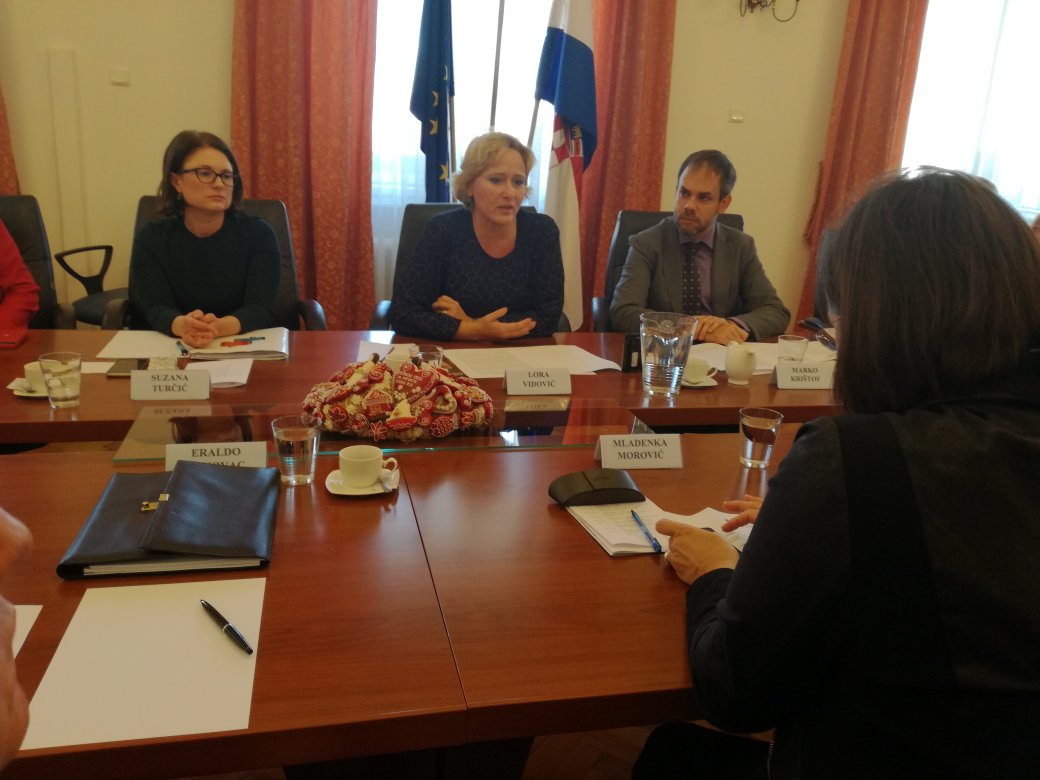
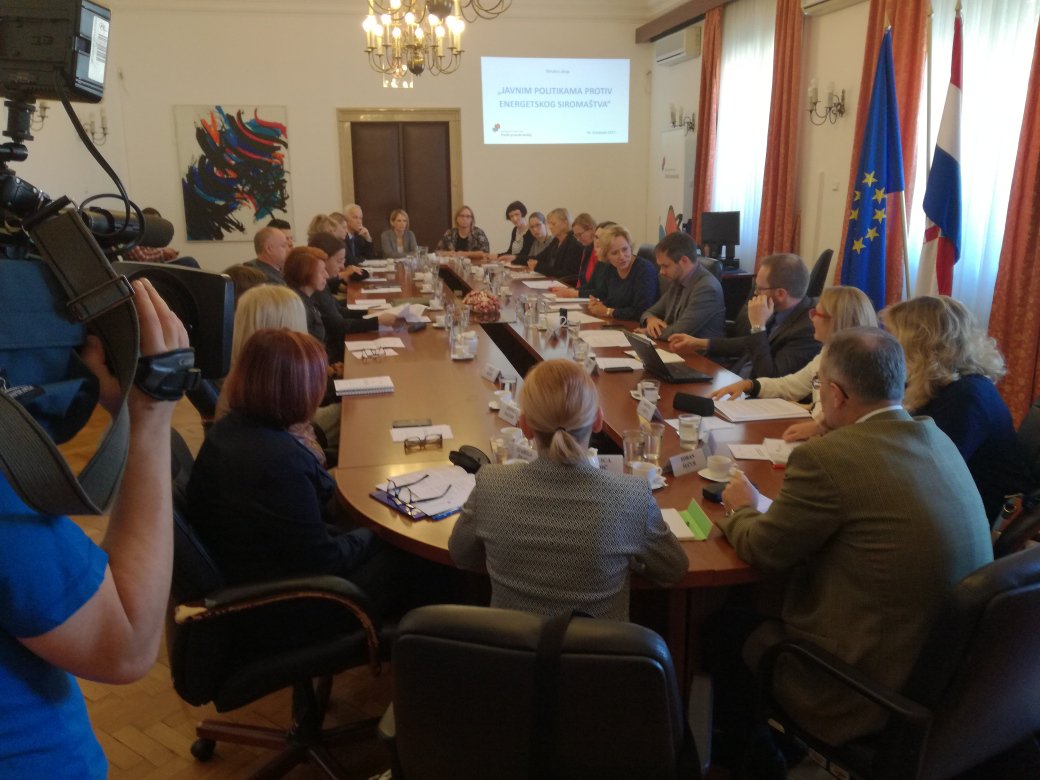
Poverty is an enemy of human rights and states are successful to the extent on how much they look after the most vulnerable, said Ombudswoman Lora Vidović at the opening of the conference on energy poverty, that she organised on the occasion of the International Day for the Eradication of Poverty and Social Exclusion. We are all witnessing the scale of poverty around us, and the official data confirm it: “19,5% of people in Croatia are in risk of poverty and 9,3% cannot afford adequate heating in winter season”, stated Marko Krištof, Head of the Croatian Bureau of Statistics.

„Energy poverty is a special form of poverty and Croatia does not have a comprehensive policy against it – no definition adopted, no threshold set, no indicators for measurement and monitoring established”, warned Ombudswoman Vidović. She added that using only the short-term damage control measures cannot help persons who live in energy poverty, and those long-term, sustainable and efficient are needed. “This is necessary for eradication of all consequences the poverty might cause to the health, work ability, family and social relations”, she concluded.

poverty Lora

Therefore, the participants welcomed the new measures announced by the representative of the Ministry of Environment and Energy, Dean Smolar. „Three programmes are planned, to be financed by the state budget and EU funds, including counselling of clients at risk as well as implementation of energy-efficient measures in households in risk of poverty, said Smolar. Diana Horvat from the Ministry of Construction and Spatial Planning added that the amount of 30 million Euro is planned for family houses reconstruction and that the money would for the first time be allocated according to the welfare criteria as well.

poverty Lora skup

Ombudswoman has been monitoring the public policies and their impact on eradication of energy poverty since 2014 and has made number of recommendations in her 2016 Annual Report to the Croatian parliament. Some of those, as heard during the conference, shall be implemented including introduction of welfare criteria while allocating sources for energy reconstruction. 


Read more

Erfahrungsaustausch zu Menschenrechten

Date of article: 20/10/2017

Daily News of: 20/10/2017

Country:  Austria

Author:

Article language: de

Als Nationaler Präventionsmechanismus (NPM) ist die Volksanwaltschaft seit 1.7.2012 mit der Einhaltung, dem Schutz und der Förderung der Menschenrechte in Österreich betraut. Gemeinsam mit Expertinnen und Experten der Kommissionen, reflektierte die Volksanwaltschaft am 19. und 20. Oktober 2017 ihre Arbeit der letzten fünf Jahre im Bereich der Menschenrechte.

Auf Einladung der Volksanwaltschaft fand am 19. und 20. Oktober 2017 ein österreichweiter Erfahrungsaustausch aller Kommissionsmitglieder in Wien statt. Gemeinsam wurde Bilanz über die vergangenen fünf Jahre gezogen: Neben Erfolgen wurden auch zukünftige Weiterentwicklungen diskutiert. Denn „Menschenrechte sind erst dann etabliert, wenn es ein solides Wissen darüber gibt, ein gefestigtes (öffentliches) Bewusstsein sowie eine unbeirrt tätige und anerkannte Kontrolle”, so die derzeitige Vorsitzende der Volksanwaltschaft Gertrude Brinek.

Im Eröffnungsvortrag stellte Univ. Prof. Helmut Fuchs den Gesetzesentwurf zum Maßnahmenvollzug im Detail vor. Dieser war zuvor von der Volksanwaltschaft in einer ausführlichen Stellungnahme kommentiert worden. Die Kommissionsleiterin Univ.-Prof. Verena Murschetz und der Kommissionsleiter Prof. Reinhard Klaushofer sowie der Generaldirektor für den Strafvollzug im BMJ Erich Mayer nutzten die Gelegenheit und diskutierten den Gesetzestext aus Sicht ihrer praktischen Arbeit.

In einzelnen Arbeitsgruppen reflektierten die Expertinnen und Experten ihre Arbeit und besprachen mögliche Weiterentwicklungen. „Im Sinne von ‘promote and protect’ fällt uns noch Vieles ein, um das Menschenrechtsmandat engagiert auszufüllen“, bedankte sich die derzeitige Vorsitzenden der Volksanwaltschaft Gertrude Brinek abschließend bei den Kommissionsmitgliedern für ihre Arbeit.

Der verfassungsrechtliche Auftrag der Volksanwaltschaft umfasst die Überprüfung von öffentlichen und privaten Einrichtungen, in denen es zu Freiheitsbeschränkungen kommt oder kommen kann. Um diese Aufgabe umsetzen zu können, hat die Volksanwaltschaft sechs regionale Kommissionen eingerichtet, die uneingeschränkten Zutritt zu allen Einrichtungen haben. Die Besuche werden von Expertinnen und Experten unterschiedlichster Fachrichtungen im Auftrag der Volksanwaltschaft durchgeführt. Damit soll präventiv verhindert werden, dass Menschen in solchen Einrichtungen jeglicher Misshandlung ausgesetzt sind.


Read more