Unvollständige Einsichtsgewährung in Externistenprüfungsunterlagen

Date of article: 20/04/2020

Daily News of: 21/04/2020

Country:  Austria

Author:

Article language: de

Der Vater einer Schülerin im Hausunterricht hatte sich an die Volksanwaltschaft gewandt. Bei einer Einsichtnahme in die Externistenprüfungsunterlagen seiner Tochter an einer Grazer Volksschule wollte er als Vertrauensperson eine pensionierte Lehrerin beiziehen, welcher jedoch der Zutritt verwehrt worden war. Auch in die Prüfungsprotokolle wurde ihm nur eine unzulängliche Einsicht gewährt: Der Kompetenzcheck sei zwar vollständig abgehakt gewesen, die ihm vorgelegten Prüfungsunterlagen hätten allerdings nur einen Teil des Kompetenzchecks enthalten und ein Zeugnis sei gar nicht beigelegt gewesen.

Die Volksanwaltschaft kam nach Prüfung und Einholung einer Stellungnahme des Bildungsministeriums zwar zum Ergebnis, dass die Gewährung des häuslichen Unterrichts rechtlich in Ordnung war. Das Kind erbrachte in Mathematik und Deutsch, wie auch in anderen Fächern, positive Leistungen. Dem Wunsch der Volksanwaltschaft entsprechend wurde auch eine Kopie des vollständigen Prüfungsprotokolls der Externistenprüfung des Mädchens übermittelt. Das Zeugnis, so das Ministerium, wäre im Original ausgehändigt worden und läge daher im Akt nicht auf. Die zuständigen Schulaufsichtsorgane der Bildungsdirektion für die Steiermark hätten weiters die Prüfungsunterlagen überprüft und wären zum Schluss gekommen, dass diese den Anforderungen der Externistenprüfungsverordnung entsprächen und die Lehrplananforderungen der Schulstufe erreicht wären.

Die weitere Prüfung der Volksanwaltschaft ergab, dass die Kinder und ihre Erziehungsberechtigten auf Verlangen vollständige Einsicht in die Prüfungsunterlagen und somit auch in das Prüfungsprotokoll erhielten. Sie wären außerdem berechtigt, an Ort und Stelle auf eigene Kosten auch Abschriften und Kopien davon anzufertigen. Sachverständige Personen könnten aber zum besseren Verständnis der Unterlagen beigezogen werden.

„Das BMBWF bestätigte somit, dass die dem Vater nicht vollständig gewährte Akteneinsicht sowie das Verbot, die von ihm ausgewählte sachverständige Vertrauensperson beizuziehen, nicht korrekt waren. Das Ministerium hat die Bildungsdirektion entsprechend informiert“, so Volksanwalt Walter Rosenkranz. „In Zukunft sollten für ihn daher keine derartigen Probleme mehr entstehen, und ich freue mich, dass die Volksanwaltschaft einen Beitrag zur Verbesserung der Situation leisten konnte.“

Read more

PROTESTA DETENUTI A PESARO, IL GARANTE IN CONTATTO CON L’ISTITUTO PENITENZIARIO

Date of article: 18/04/2020

Daily News of: 21/04/2020

Country:  Italy - Marche

Author: Garante regionale dei diritti della persona - Regione Marche

Article language: it

Nobili fa presente che in questo periodo l’attenzione dell’Autorità di garanzia è stata rivolta soprattutto alla questione sanitaria ed attualmente non risultano casi positivi al Coronavirus sia tra i detenuti che tra gli agenti di polizia penitenziaria. Auspicata collaborazione a tutti i livelli

Il Garante dei diritti Andrea Nobili in contatto con l’istituto penitenziario di Villa Fastiggi a Pesaro, dopo la protesta dei detenuti.
“La nostra interlocuzione con i vertici della casa circondariale e dell’amministrazione penitenziaria – sottolinea Nobili – non si è mai interrotta. In questo periodo l’attenzione dell’Autorità di garanzia è stata rivolta soprattutto alla questione sanitaria ed a ieri, secondo riscontri effettuati, non risultano casi positivi al Coronavirus sia tra i detenuti che tra gli agenti di polizia penitenziaria”.
Il Garante non manca di evidenziare che “a Villa Fastiggi esiste, non l’abbiamo mai nascosto, un oggettivo problema di sovraffollamento che in situazioni emergenziali non può che acuire le criticità più volte rappresentate”.
Il rinnovato auspicio è che per far fronte alla situazione degli istituti marchigiani “ci sia una collaborazione concreta – stigmatizza Nobili – che veda la partecipazione attiva di tutte le componenti chiamate ad intervenire nell’ambito del mondo carcerario. Questo al di là delle più volte segnalate problematiche di organici e dell’assegnazione di un Presidente effettivo, come nel caso del Tribunale di sorveglianza di Ancona, e di presenza sul territorio, come per il Prap attualmente chiamato ad interagire con Emilia-Romagna e Marche con le le innumerevoli difficoltà logistiche del caso”.

Read more

Strategic Plan 2020-2024 published

Date of article: 17/04/2020

Daily News of: 21/04/2020

Country:  United Kingdom

Author:

Article language: en

Today Rosemary Agnew, Scottish Public Services Ombudsman, laid her Strategic Plan for 2020-2024 before the Scottish Parliament, as required by section 17A of the Scottish Public Services Ombudsman Act 2002.

In it the Ombudsman sets out her vision for the delivery of the SPSO’s functions under the strategic themes of accessibility, access to justice, capacity and standards.

She said: “In delivering our strategy, we are adding value by contributing to Scottish public services improvement and providing access to justice for users of those services. We understand both the complexity of our business and the challenges and risks SPSO and Scottish public services face over the coming years”.

Rosemary Agnew acknowledged the additional challenges that the COVID-19 pandemic presents to the SPSO and Scottish public services, highlighting that the longer-term impact is likely to span years rather than months. 

The key strategic risk to the SPSO is capacity, in particular the adequacy of resources and impact of the unpredictability of work volumes. Irrespective of the impact of COVID-19, SPSO already struggles to deliver its functions within published timescales, and this is likely to worsen.

“Any increase in volume is, effectively, a cut in resources, and unless we can maintain our capacity, we face the prospect of having to make difficult decisions about the extent to which we deliver our statutory functions, which in turn could undermine trust and confidence, both in us and Scottish public services.” 

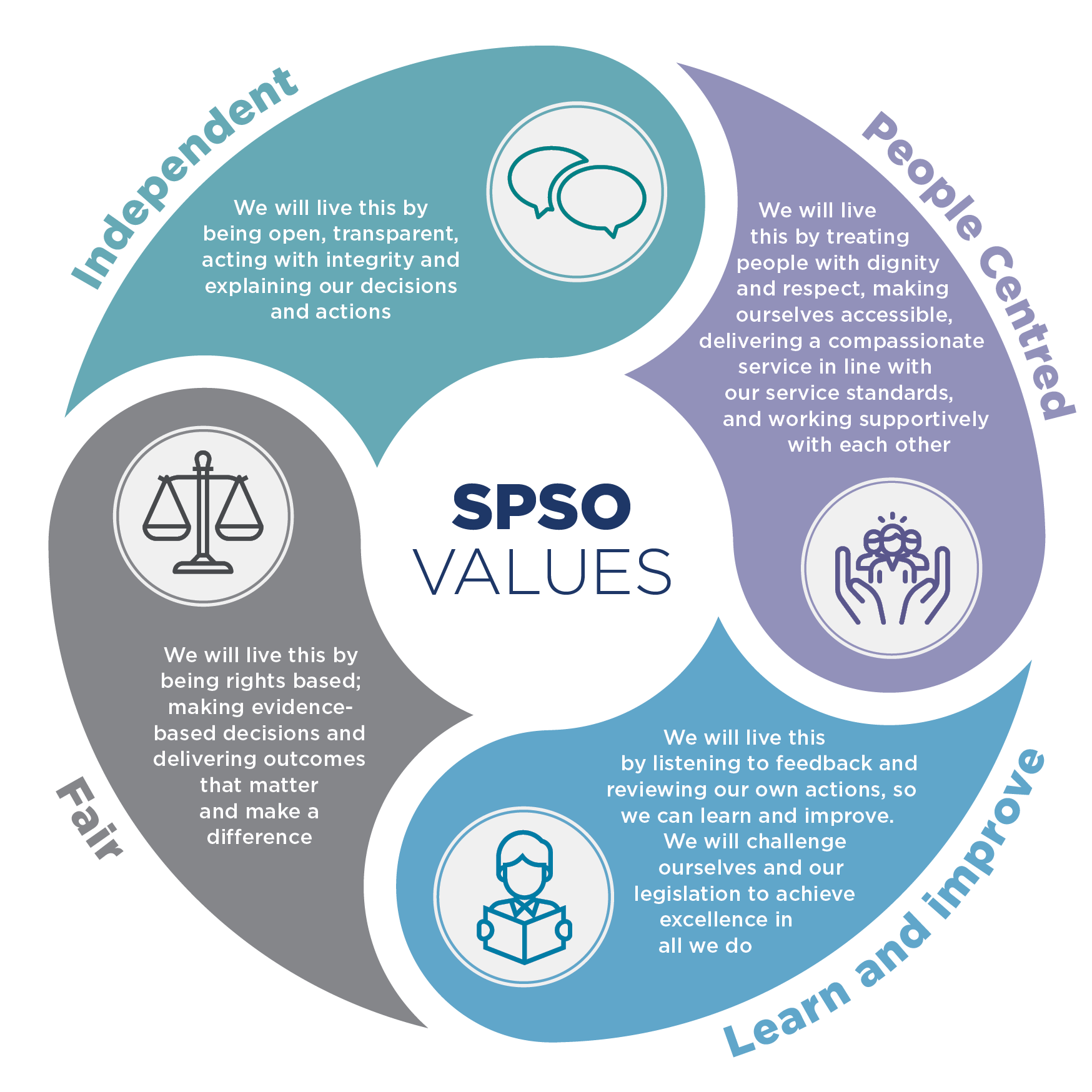
“We are a great team; dedicated and committed, driven by deep-rooted values of being people centred, fair, independent, and learning and improvement.”

Read more

European Parliament: Democracy, rule of law, and fundamental rights during the pandemic.

Date of article: 17/04/2020

Daily News of: 21/04/2020

Country:  EUROPE

Author: European Parliament

Article language: en

Committee and political groups meetings - Brussels

In an effort to reduce the spread of the COVID-19 virus, Parliament is reducing the need for physical meetings on its premises, without compromising its role of democratic scrutiny nor its ability to approve the necessary legislative measures to combat the virus and support the public, consumers, businesses and emergency services.

The required social distancing will be respected on EP premises at all times. Any parliamentary activities, like committee and plenary meetings, which are still taking place will be web-streamed and can be followed by the media without requiring their physical presence on EP premises. MEPs, Commissioners and Council representatives will be able to participate remotely.

European Council/Response to COVID-19. EP President David Sassoli will address EU leaders on Parliament’s call for a joint EU action also post-lockdown, “recovery bonds” guaranteed by the EU budget, and an EU Coronavirus Solidarity Fund of at least EUR 50 billion (Thursday).

Eurogroup President Centeno. Ahead of the European Council meeting scheduled on 23 April, the Economic and Monetary Affairs Committee will debate policy measures intended to combat the economic, financial and social consequences of the COVID-19 crisis with Eurogroup President Mário Centeno (Tuesday).

Exporting protective masks. MEPs of the International Trade Committee will debate with Trade Commissioner Phil Hogan on extending the obligation to authorise the export of protective masks and on the EU's response to the impact of COVID-19 on trade. (Tuesday)

Democracy, rule of law, and fundamental rights during the pandemic. The Civil Liberties Committee will discuss the situation of the rule of law in Poland with the Secretary of the State in the Ministry of Justice Marcin Warchoł, Justice Commissioner Didier Reynders, Ambassador Irena Andrassy for the Council, and Polish Commissioner for Human Rights Adam Bodnar. Later on, they will assess emergency measures taken in all member states in the context of the pandemic, with a focus on Hungary, hear back from the Committee's dedicated working group, and discuss with Commissioner Reynders the annual Rule of Law Report (Thursday).

Impact of COVID-19 on tourism. MEPs of the Transport and Tourism Committee will debate with Internal Market Commissioner Thierry Breton on the Commission’s response to the impact of the COVID-19 crisis on the tourism sector (Tuesday).

Long-term budget/Response to COVID-19. The Regional Development Committee will debate with Commission Executive Vice-President Valdis Dombrovskis and Cohesion and Reforms Commissioner Elisa Ferreira on the future of EU cohesion policy in the next EU long-term budget (MFF). Discussions should also include the role of SMEs, next steps for reforms and the social consequences of the crisis (Monday).

COVID-19 crisis/EU Green Deal. The Environment, Public Health and Food Safety Committee will discuss the EU’s response to the COVID-19 crisis with Health and Food Safety Commissioner Kyriakides and Crisis Management Commissioner Lenarčič and the European Green Deal and the EU Climate Law with Executive Vice-President Timmermans (Tuesday).

Impact of COVID-19 for EU external action. Foreign Affairs, Human Rights and Security and Defence MEPs will debate the implications of the COVID-19 pandemic on the EU’s foreign policy actions with EU foreign policy chief Josep Borrell. Later on, Foreign Affairs and Human Rights MEPs and Mr Borrell will discuss the EU Action Plan on Human Rights and Democracy for 2020-2024 (Monday).

Read more

Das Kabinett hat sich a. 16.04.2020 auf einen Fahrplan zur Lockerung der Corona-Beschränkungen in Baden-Württemberg geeinigt. Die Beschränkungen der Corona-Verordnung werden schrittweise zurückgenommen.

Date of article: 16/04/2020

Daily News of: 21/04/2020

Country:  Germany

Author:

Article language: de

Das Kabinett hat sich a. 16.04.2020 auf einen Fahrplan zur Lockerung der Corona-Beschränkungen in Baden-Württemberg geeinigt. Die Beschränkungen der Corona-Verordnung werden schrittweise zurückgenommen.

Read more