(FRA)The fundamental rights implications of the European Arrest Warrant

Date of article: 26/10/2020

Daily News of: 28/10/2020

Country:  EUROPE

Author:

Article language: en

When: 26 October 2020
European Council
Website: Working Party on Cooperation in Criminal Matters (COPEN)
External event

FRA presented its plans to update its Criminal Detention database during a meeting of the Council Working Party on Cooperation in Criminal Matters on 26 October.


It will also refer to its work relevant to the European Arrest Warrant, such as the report on Rights in practice: access to a lawyer and procedural rights in criminal and European arrest warrant proceedings. At the meeting, representatives of Member States and EU Institutions will discuss the fundamental rights implications of implementing of the Framework Decision on the warrant, 20 years after the Decision has been in force.

Read more

Scuole e COVID, la Garante: evitare la chiusura, Si valuti un'organizzazione alternativa della frequenza

Date of article: 23/10/2020

Daily News of: 28/10/2020

Country:  Italy - Molise

Author:

Article language: it

“Alla luce della situazione che si sta registrando in Italia sul fronte del Coronavirus, intendo rivolgere un appello a tutte le istituzioni interessate affinché si scongiuri il rischio di chiusura degli istituti scolastici. Lo si faccia trovando modalità alternative di gestione del sistema-scuola, sia per quel che riguarda l’organizzazione dell’attività didattica, sia sotto il profilo di un’ottimizzazione delle misure sanitarie, screening compreso”. A parlare è la Garante regionale dei Diritti della Persona che, proseguendo l’impegno portato avanti su questo fronte con le numerose iniziative intraprese dall’inizio della pandemia ad oggi, torna ancora una volta a ribadire l’importanza di non privare i minori di uno strumento insostituibile qual è quello della didattica in presenza. Per tutti gli studenti, ma soprattutto per i bambini più piccoli.

Leontina Lanciano punta i riflettori su diversi aspetti che, a suo avviso, vanno considerati. Aspetti che riguardano, da un lato, i motivi di assoluta preminenza che impongono di fare il possibile per impedire il blocco della frequenza e, dall’altro, l’importanza di perfezionare le linee guida e i protocolli sanitari adeguandoli alle necessità dei minori in età scolare e delle loro famiglie.

“Gli esperti – spiega la dottoressa Lanciano – a più riprese hanno paventato le conseguenze negative che la sospensione dell’attività didattica e l’isolamento hanno avuto sui minori. I medici dell’ospedale Gaslini hanno parlato di problemi comportamentali e sintomi di regressione nel 65% di bambini di età minore di 6 anni e nel 71% di quelli di età maggiore di 6 anni. Gli psicologi e gli psichiatri italiani hanno sottolineato come lo sviluppo della personalità dei più piccoli sia stato significativamente compromesso dall’impossibilità di relazionarsi con i coetanei. Senza contare, poi, che la didattica a distanza non può essere equiparata a quella fatta di persona e, in ogni caso, non sempre ha dato i suoi frutti, specie per i bambini più piccoli”.

In questo momento, aggiunge l’Organo regionale di garanzia, “stiamo assistendo a una recrudescenza della diffusione del virus ed è chiaro che ciò potrà comportare una nuova stretta con ulteriori limitazioni a livello generalizzato. Ma non si torni a penalizzare l’istruzione che, urge ricordare, resta uno dei diritti fondamentali del minore, come riconosciuto dall’ordinamento giuridico nazionale e sovranazionale. Finora dal Governo centrale non ci sono state indicazioni di chiusura, e il mio invito è rivolto a far sì che si proceda su questa direzione. In caso di necessità si valutino altre opzioni, quali ad esempio le lezioni organizzate per classi in turni giornalieri o settimanali. Cosa, questa, che andrebbe a ridurre anche il problema del sovraffollamento di scuolabus e autobus. In casi estremi, si potrebbe ad esempio prendere in considerazione l’ipotesi di un sistema misto di didattica in presenza e a distanza, per limitare la concentrazione di studenti nello stesso edificio, ma il blocco totale della frequenza va evitato”.

Ciò, rimarca la Garante, “anche per salvaguardare i diritti dei soggetti più deboli, che finora hanno pagato più di tutti lo scotto della pandemia: si pensi agli studenti con disabilità, che non hanno potuto compensare l’assenza dalla scuola con lo strumento della didattica a distanza”.

Per salvaguardare la scuola, conclude la dottoressa Lanciano, “sarebbe conveniente intervenire, infine, anche sulle linee guida e sui protocolli sanitari elaborati dal ministero della Salute, che non essendo pensati per i minori rischiano di complicare la situazione. In caso di sospetto contagio le procedure sono complesse e spesso poco chiare, cosa che comporta problemi per le famiglie e per gli istituti scolastici. A questo bisognerebbe porre rimedio, così come sarebbe auspicabile pensare a modalità differenti di screening. Screening che andrebbe effettuato in maniera adeguata sull’intera popolazione scolastica. Promuovendo il ricorso a metodi diagnostici più veloci, come i test salivari, si potrebbero monitorare tutti gli alunni, con indubbio vantaggio della salute collettiva”.

Read more

Coordinamento dei difensori civici: due giorni di confronti ad Ancona per i diritti fondamentali in tempo di emergenza sanitaria

Date of article: 23/10/2020

Daily News of: 28/10/2020

Country:  Italy - Lombardy

Author:

Article language: it

I Difensori civici delle Regioni e delle Province autonome riuniti ad Ancona il 13 e 14 ottobre si sono confrontati sullo stato della Difesa civica in Italia e sull’attribuzione delle funzioni di Garante della salute ai Difensori regionali.

In tempi di emergenza sanitaria, il Difensore civico può contribuire a consolidare il rapporto fiduciario tra cittadini e istituzioni grazie alla sua attività di mediazione.

La raccomandazione del Coordinamento

https://www.difesacivicaitalia.it/2020/10/15/638/

Read more

The National Preventive Mechanism mostly made unannounced visits to places of deprivation of liberty

Date of article: 22/10/2020

Daily News of: 28/10/2020

Country:  Slovenia

Author:

Article language: en

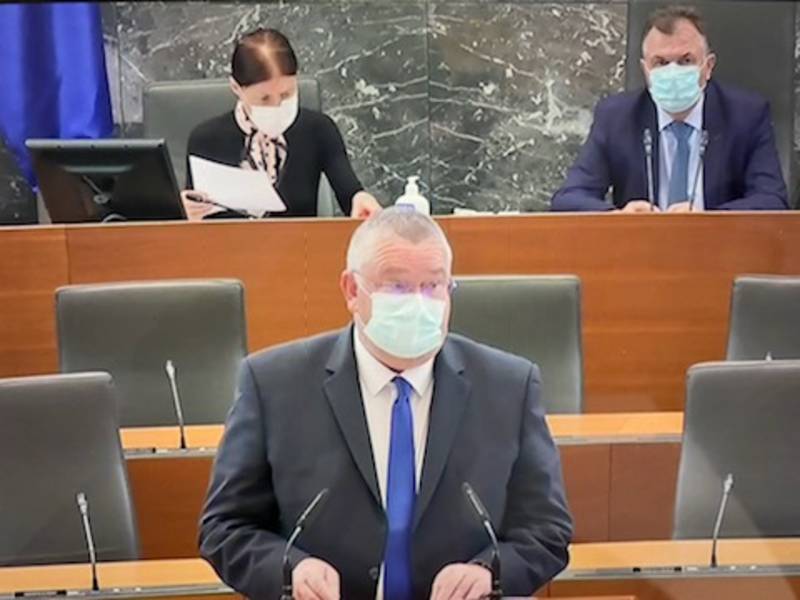
The National Assembly of the Republic of Slovenia took note of the 2019 Report of the National Preventive Mechanism at today's session of 22 October 2020. As the Human Rights Ombudsman, Peter Svetina, was in contact with a person infected with COVID-19 and therefore is in quarantine, Deputy Human Rights Ombudsman and Head of the National Preventive Mechanism Ivan Šelih presented the report to the deputies. The main goal of the National Preventive Mechanism is to strengthen the protection of persons deprived of liberty, while the institution of the Human Rights Ombudsman has been carrying out this mission for twelve years.

Based on the Act ratifying the Optional Protocol to the Convention against Torture and other Cruel, Inhuman or Degrading Treatment or Punishment, the members of the National Preventive Mechanism visit places where persons deprived of liberty are located. "The purpose of the National Preventive Mechanism is to enhance protection against torture and other cruel, inhuman or degrading treatment or punishment. These are preventive visits, the purpose of which is to thwart torture or other ill-treatment before it occurs," said Deputy Ombudsman Šelih in his opening address. He also expressed his satisfaction that he and his colleagues discovered no cases of torture during their visits to different institutions last year.

He said that the Ombudsman as a representative of the NPM visited 63 places of the deprivation of liberty in Slovenia in 2019: police stations, prisons, the Radeče Correctional Facility, the Centre for Foreigners, two psychiatric hospitals, social protection institutions, and residential treatment institutions, where he investigated how individuals deprived of their liberty are being treated. "Most of these visits were unannounced, while we also arranged more than ten thematic visits, during which we focused on a specific topic we had chosen beforehand. In cooperation with a medical expert, for instance, we visited residential homes for the elderly and observed how the elderly were being treated in the evening hours. We paid special attention to the therapy residents were receiving, especially regarding sleep aids," explained Šelih. He also added that, after each visit, a comprehensive report with proposals and recommendations for the elimination of established irregularities and improving the situation is prepared.

The National Preventive Mechanism issued 416 recommendations in 2019, while Deputy Ombudsman Šelih praised the relatively good responses to the NPM's findings by the responsible authorities. The visited institutions try to implement all measures required to make improvements in their jurisdiction; however, as Ombudsman Peter Svetina has noted multiple times, it is unacceptable that 28 of the NPM's recommendations were not taken into account by the responsible authorities, while institutions failed to respond in ten cases. The institution of the Human Rights Ombudsman expects that institutions take their recommendations into account and desires more constructive cooperation with the relevant ministries, especially regarding issues requiring systemic changes, according to Šelih.

In his address, Deputy Ombudsman Šelih mentioned the visits to residential homes for the elderly, where the NPM often discovered a shortage of staff, especially in the night-time, e.g. the secure ward is often left unattended for periods of time. As in previous years, the Ombudsman identified significant problems regarding obtaining the legal basis for detention in institutions where the protection of residents is not carried out by locking the ward. "We determined that the procedures for the verification of secure wards at the relevant ministry take very long to complete. In some cases even eight years. The secure wards in residential homes for the elderly have been overcrowded for some time now. We even found cases where a person with dementia was placed in a bathroom because the ward was full," explained Šelih. He also emphasised that the mentioned shortage of staff and this year's COVID-19 epidemic cannot serve as excuses for accommodating people from secure wards of residential homes for the elderly, where people with dementia are placed, and from special social protection institutions in dining halls, living rooms, halls, or bathrooms.

Deputy Ombudsman Šelih also noted the issue of individual cases of overcrowded prisons, which is also a consequence of an increase in the number of foreigners. According to Šelih, there is a shortage of staff in all areas of care for people whose freedom of movement has been restricted, especially a shortage of judicial police officers. When visiting the Radeče Correctional Facility, the National Preventive Mechanism assessed that some parts of the institution are completely unsuitable and markedly unfriendly to young persons, and do not contribute to their successful rehabilitation. The women's prison in Ig is also in dire need of renovation. The Ombudsman also underlined the need to continue the construction of a new prison in Ljubljana, especially in light of overcrowding and the implementation of a judgement of the European Court of Human Rights.

The Head of the National Preventive Mechanism also underlined the Mental Health Act, as the Ombudsman has been stressing the importance of and waiting for amendments to this Act for more than ten years. "The Constitutional Court has already judged the Mental Health Act to be unconstitutional twice, while the responsible ministry has been promising amendments, which nevertheless have yet to materialise. It is unacceptable that the amending act is just sitting on the table due to the inefficient work of the relevant authorities and intersectoral cooperation," added Šelih.

The National Preventive Mechanism will continue to actively visit places of the deprivation of liberty and, based on its findings, provide recommendations to improve the situation where necessary.


Foto galerija (1)

Read more

El Síndic investiga la implementación de la aplicación de rastreo de contactos con COVID-19

Date of article: 28/10/2020

Daily News of: 28/10/2020

Country:  Spain - Catalonia

Author:

Article language: es

La aplicación Radar COVID se ha implementado en el conjunto del territorio español, y desde ayer, en Cataluña    

El Síndic quiere conocer los detalles de su aplicación en Cataluña y el posicionamiento del Departamento de Salud en relación con el uso de esta herramienta      

En el mes de junio el Síndic ya manifestó una serie de requisitos para que esta aplicación fuera compatible con el derecho a la intimidad de las personas      

La Comisión Europea emitió orientaciones para los estados miembros acerca del uso de estas aplicaciones

El Gobierno del Estado ha puesto en marcha en la mayoría del territorio español una aplicación que mediante unos sistemas automatizados de localización a través del móvil permite identificar a las personas que hayan estado en contacto con una persona infectada y alertarles del posible contagio.

La Generalitat de Cataluña hizo público ayer que a partir de ahora ya funcionna esta aplicación móvil Radar Covid en Cataluña, la única comunidad autónoma donde aun no se había puesto en funcionamiento. 

En el mes de junio, en el informe Salud y derechos en la crisis de la COVID-19, presentado en el Parlamento de Cataluña, el Síndic ya destacaba que el uso de estas aplicaciones para contribuir a la lucha contra la pandemia debía ser compatible con el respeto al derecho a la intimidad y a la protección de datos personales y relacionaba un conjunto de requisitos para que este instrumento fuera compatible con el derecho a la intimidad de las personas. En este informe el Síndic ya realizaba una serie de consideraciones como que el tratamiento de datos a que habilita el marco jurídico está sujeto al principio de proporcionalidad, lo que significa que datos objeto de tratamiento tengan una finalidad concreta y

precisa, que el tratamiento sea adecuado y necesario para conseguirla, que no exista una alternativa menos perjudicial para la privacidad de las personas que este tratamiento, y que se adopten las medidas de seguridad necesarias para evitar daños adicionales al derecho a la privacidad. También manifestaba la necesidad de que los datos tratados sean los mínimos imprescindibles para conseguir la finalidad pretendida y evitar el tratamiento masivo de datos no necesarios, y que el tratamiento también debe ser limitado en el tiempo a lo estrictamente necesario para alcanzar la finalidad pretendida.

Asimismo manifestaba que debe garantizarse que los datos se eliminen una vez la epidemia esté controlada, incorporando, en su caso, mecanismos automatizados de eliminación de datos. Y, en un ámbito más general, esgrimía la conveniencia de dar la máxima transparencia y difusión pública al cumplimiento de los requisitos que se han indicado en la puesta en marcha, con el fin de permitir el control de la ciudadanía sobre la medida creada y su aplicación. Con este objetivo, el Síndic sugería que debían hacerse públicos los mecanismos técnicos -algorritmos, códigos y protocolos- de la aplicación, identificar claramente los datos concretos que se obtendrán de los usuarios, cómo se obtendrán, con qué finalidad y durante cuánto tiempo, así como la prohibición de cesión a terceros que no estén directamente implicados en la lucha contra la COVID-19.

El Síndic comparte el criterio, expresado desde diversas instancias, de que la implementación de estas aplicaciones debería basarse en la voluntariedad de los titulares de los datos, para facilitar un uso generalizado y que cuente con la complicidad de la ciudadanía en el objetivo común de lucha contra la COVID-19. En este mismo sentido se han pronunciado, entre otros, la Comisión Europea en la comunicación publicada el 17 de abril pasado, que contiene orientaciones para los estados miembros sobre el uso de estas aplicaciones. Asimismo, conviene destacar también singularmente la declaración común de la presidenta del Comité del Convenio 108 y el Comisionado de Protección de Datos del Consejo Europeo, de 28 de abril, que también subraya esta voluntariedad y relaciona en trece puntos los elementos que considera que deben tenerse en cuenta para desarrollar estos mecanismos automatizados de trazado de contactos a través de aplicaciones móviles.

Por todo lo anterior, el Síndic ha abierto una actuación de oficio con el fin de conocer las actuaciones del Departamento de Salud en cuanto a la implementación en Cataluña de esta aplicación y de sus características.

Read more