Disability Directorate of Office of Commissioner for Fundamental Rights to Commence Activities in Debrecen

Date of article: 12/05/2023

Daily News of: 12/05/2023

Country:  Hungary

Author:

Article language: en

The Disability Directorate of the Office of the Commissioner for Fundamental Rights of Hungary commenced its activities in Debrecen. Since 1 January 2023, the Ombudsman has been performing the tasks of the independent mechanism of the UN Convention on the Rights of Persons with Disabilities (CRPD), so beyond the activities that we have performed in this field to date, now we also help, protect and control the enforcement of the fundamental rights of persons with disabilities directly,  as was stressed by Commissioner for Fundamental Rights of Hungary Dr. Ákos Kozma at the inauguration ceremony of the new office in Debrecen on 3 May 2023. The Disability Directorate moved to a new, larger, barrier-free building together with the Office’s Debrecen Field Office. 

Hungary was one of the first to join CRPD, which was adopted in 2006, in relation to which it was specifically stipulated in the Act on the Commissioner for Fundamental Rights that, as part of his activities, the Ombudsman shall pay special attention to supporting, protecting and controlling the enforcement of CRPD, especially by conducting ex officio procedures.

“Ever since it started its operations, the Hungarian ombudsman institution has laid great emphasis on promoting the rights of persons with disabilities. Since I took office as the Commissioner for Fundamental Rights of Hungary, I have regarded it as my key responsibility to promote the actual fulfilment of the principles of CRPD, as well as to contribute to ensuring the equality before the law, the fulfilment of the requirement of equal treatment and independent living for persons with disabilities in Hungary. It can be considered a milestone that at the end of 2022, the National Assembly passed a law according to which the independent mechanism helping, protecting and controlling the enforcement of CRPD became the competence of the ombudsman. Thus, in the framework of the Disability Directorate that was established as a separate organisational unit of the Office of the Commissioner for Fundamental Rights on 1 January 2023, we now directly support, protect and monitor the enforcement of the fundamental rights of persons with disabilities. We continuously monitor the operation of the entire range of Hungarian disability institutions, their statutory regulation, we comment on the reports and proposals on the enforcement of the disability convention. It is also our new responsibility to make recommendations to the members of the Government regarding the government decisions affecting persons with disabilities”, stressed Dr. Ákos Kozma.

So far, the Commissioner for Fundamental Rights has promoted the enforcement of the rights of persons with disabilities, their legal equality and equal opportunities by bringing up general problems with fundamental rights aspects, outlining the potential solutions, and remedying individual complaints. The Office continues to deal with specifically disability-related complaints and inquiries, as the Commissioner for Fundamental Rights is confronted with a high number of issues and problems in the course of monitoring education and health care which affect the persons with disabilities and their families.

“A new Disability Advisory Committee is being set up, with the participation of experts with outstanding theoretical knowledge and/or practical experience in the field of the rights of persons with disabilities. I would like to stress that in this body, the delegates representing persons with disabilities and civil society organisations are given a key role”, as the Ombudsman emphasised.

He added that, with the Disability Directorate of the Office of the Commissioner for Fundamental Rights, such an organisational unit with strong authorisations has been established which represents a specific independent mechanism, compliant with the requirements of CRPD, in the interests of the rights protection of Hungarian persons with disabilities.

Read more

Éclairages : une étude sur les discriminations envers les bénéficiaires de la Complémentaire santé solidaire (CSS) et de l’Aide médicale de l’État (AME)

Date of article: 12/05/2023

Daily News of: 12/05/2023

Country:  France

Author:

Article language: fr

Le 12 mai, le Défenseur des droits publie une étude menée auprès de trois spécialités médicales visant à mesurer les refus de soins opposés aux bénéficiaires de la CSS et de l’AME.

L’étude, appelée « Les refus de soins opposés aux bénéficiaires de la Complémentaire santé solidaire et de l’Aide médicale de l’État », est publiée dans le prolongement des travaux menés en 2019 pour mesurer les refus de soins discriminatoires liés à la vulnérabilité économique.

Réalisée à la demande du Défenseur des droits et du ministère de la Santé par une équipe de recherche de l’Institut des politiques publiques (IPP), s’appuie sur un testing téléphonique réalisé entre mars et septembre 2022 auprès de plus de 3 000 praticiens (1 088 généralistes, 1 008 ophtalmologues et 990 pédiatres) et documente les refus de soins opposés aux bénéficiaires de la Complémentaire santé solidaire (CSS) et de l’Aide médicale de l’État (AME).

  • La complémentaire santé solidaire (CSS) vise à faciliter l'accès à une assurance complémentaire santé pour les personnes qui résident en France de façon stable et régulière, qui sont affiliées à la sécurité sociale française, et disposent de faibles ressources.
  • L’Aide médicale de l’État (AME) permet aux étrangers en situation irrégulière d'avoir accès à certains soins, sous certaines conditions : bénéficier de ressources inférieures à un plafond et résider en situation irrégulière en France depuis au moins trois mois.

Des discriminations constatées envers les bénéficiaires de l’AME

Dans un contexte marqué par de fortes difficultés d’accès aux soins pour tous - une demande de rendez-vous sur deux a échoué - les résultats de l’étude mettent en évidence des discriminations envers les patients bénéficiaires de l’AME en particulier, qui ont une probabilité d'obtenir un rendez-vous inférieure de 10 à 12 points de pourcentage par rapport aux patients de référence (Les patients dits de « référence » sont les patients ne déclarant le bénéfice d'aucune aide). Ces discriminations sont relevées dans les trois spécialités médicales considérées, quels que soient le genre et le secteur d’exercice des praticiens. Si les patients bénéficiaires de la CSS obtiennent un rendez-vous médical dans les mêmes proportions que les patients de référence, ils font néanmoins, pour certains, face à des refus discriminatoires explicites (1 à 1,5 % des cas). Cette discrimination de faible ampleur contraste avec les résultats d’études précédentes sur les bénéficiaires de de la couverture maladie universelle complémentaire (CMU-C) et de l’aide à la complémentaire de santé (ACS), prestations remplacées par la CSS en 2019.

La réticence à l’égard de la prise en charge des bénéficiaires de l’AME est susceptible de s’expliquer à la fois par des préjugés selon lesquels la prise en charge de ces patients serait plus complexe (patients en moins bonne santé, ne maîtrisant pas ou peu le français, consultation plus longue…) et par l’anticipation de démarches administratives plus lourdes pour les professionnels de santé (et les caisses d’assurance maladie) dans la mesure où ces patients ne bénéficient pas de la carte Vitale.

Un besoin de simplification du cadre législatif

Face à ces résultats, le Défenseur des droits renouvelle sa recommandation de fusion des dispositifs Assurance maladie/AME ou, a minima, la création pour les bénéficiaires de l’AME d’une carte numérique ouvrant l’accès aux mêmes facilités que pour les personnes affiliées à l’Assurance maladie. À l’instar de la simplification du cadre législatif des statuts de la CMU-C et de l’ACS, que le Défenseur avait par ailleurs appelée de ses vœux dans la décision-cadre 2018-269 du 22 novembre 2018, la fusion de ces dispositifs présenterait des avantages, non seulement pour les professionnels de santé – simplification des démarches et réduction des délais de remboursement – mais également pour les Caisses primaires d’assurance maladie (CPAM), en réduisant leurs coûts administratifs liés à la gestion de deux dispositifs parallèles.

Le Défenseur des droits rappelle également qu’un refus de soins discriminatoire à l’encontre d’un bénéficiaire d’une aide ciblée est un délit et un acte contraire à la déontologie et à l’éthique médicale, et recommande aux professionnels de mettre leurs pratiques en conformité avec la loi.

Read more

IOI Ombudsman News 18/2023

Date of article: 12/05/2023

Daily News of: 12/05/2023

Country:  WORLD

Author:

Article language: en


Complaint Handling Forum

AUSTRALIA | Commonwealth and ACT Ombudsman published paper on multi-agency service delivery and hosts its annual Complaint Handling Forum

In April 2023, the Office of the Commonwealth Ombudsman published an Insights paper on multi-agency service delivery, to provide specifics on complaint handling, communication and responding when things go wrong. In June 2023, the Office will hold its annual Complaint Handling Forum.


» more information

» google translate (Francais)
» google translate (Español)


Workshop facilitators and participants

NEW ZEALAND | Regional Workshop for Pacific Ombudsman and Integrity Institutions

The New Zealand Office of the Ombudsman (OOTO) held a two day in person workshop for Ombudsman and integrity institutions in the Pacific region, supported by a subsidy from the International Ombudsman Institute (IOI). 


» more information

» google translate (Francais)
» google translate (Español)


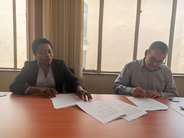
Malera and Drouet putting pen to paper

MALAWI | The Ombudsman signs MoU with Voice of Accountability

The Ombudsman of the Republic of Malawi, Grace Malera, on Thursday, May 4 2023, signed a Memorandum of Understanding (MoU) with the Voice of Accountability project for a production of radio and television programs called Kulondoloza.


» more information

» google translate (Francais)
» google translate (Español)


Le Plan stratégique 2023-2028 du Protecteur du citoyen

CANADA | Le Protecteur du citoyen a déposé à l’Assemblée nationale son Plan stratégique 2023-2028

Le 27 avril 2023, le protecteur du citoyen, M. Marc-André Dowd, a déposé à l’Assemblée nationale le Plan stratégique 2023-2028. Ce document est le fruit d’une réflexion globale sur les enjeux auxquels fait face l’institution du Protecteur du citoyen.


» more information

» google translate
» google translate (Español)


Consejo Asesor Catalán

ESPAÑA | Nombrados los doce miembros del Consejo Asesor para la Prevención de la Tortura

El 3 de mayo 2023 el Parlamento de Cataluña designó a los doce miembros que formarán parte del Consejo Asesor del Mecanismo Catalán para la Prevención de la Tortura (MCPT) durante los próximos seis años.


» more information

» google translate
» google translate (Francais)


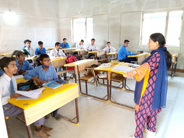
School building rented out to tenants

PAKISTAN | School building retrieved from illegal occupants after Sindh Ombudsman took suo moto action

Sindh Ombudsman Ajaz Ali Khan got the Government school building vacated from tenants after taking Suo Moto action on a report titled “Ebrahim Ali Bhai, Boys Government Secondary School building rented out to tenants” published on 12 January 2023 in “The Express Tribune”.


» more information

» google translate (Francais)
» google translate (Español)


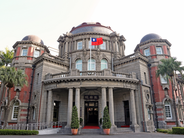
Control Yuan

CONTROL YUAN, TAIWAN | CY finds systemic problems when investigating cases involving corporal punishment and gender equality among school teachers

Through the investigation of cases involving corporal punishment and gender equality among school teachers, as well as following up on investigation reports and corrective cases, the Control Yuan has found that there are still two systemic issues that require improvement in the current practical operation of the school faculty evaluation committees.


» more information

» google translate (Francais)
» google translate (Español)


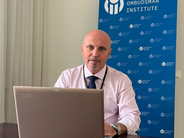
Gabriel Savino participando en el foro regional

ARGENTINA | Gabriel Savino expuso en un Foro sobre Inteligencia Artificial en Colombia

El defensor del Pueblo a cargo Gabriel Savino participó, de manera virtual desde la sede de Austria del Instituto Internacional del Ombudsman (IIO), del segundo foro regional sobre protección en ambientes digitales y libertad de expresión, denominado Inteligencia Artificial, Derechos Humanos, Libertad de Expresión e Influencers que se realizó el pasado martes en la Universidad Santo Tomás de Bogotá y fue organizado por la Defensoría del Pueblo de Colombia.


» more information

» google translate
» google translate (Francais)


BELGIQUE | Le Médiateur fédéral présente son rapport annuel 2022

Le 24 avril 2022, le Médiateur fédéral a rendu public son rapport annuel et l’a présenté à la Chambre des représentants.


» more information

» google translate
» google translate (Español)
Read more

Polizeizulage im Petitionsausschuss beraten

Date of article: 12/05/2023

Daily News of: 12/05/2023

Country:  Germany - Rhénanie-Palatinat

Author:

Article language: de

Eine Online-Petition auf der Homepage der Bürgerbeauftragten hatten 7.345 Personen mitgezeichnet. Ziel der Eingabe ist die Erhöhung der bestehenden Polizeizulage auf mindestens 200,00 EUR monatlich, deren Dynamisierung und Ruhegehaltsfähigkeit.

Nach einer Anhörung des Petenten in einer gemeinsamen Sitzung des Haushalts- und Finanzausschusses, sowie des Petitionsausschusses, hat der Petitionsausschuss nun beschlossen, die Eingabe der Landesregierung zur Erwägung zu überweisen. „Damit ist sichergestellt, dass die Thematik bei der Aufstellung des nächsten Landeshaushalts in die Regierungsberatungen mit einfließt“, so Barbara Schleicher-Rothmund.

Mit der öffentlichen Anhörung hat der Petitionsausschuss erstmals von der neu in die Geschäftsordnung des Landtags aufgenommenen Möglichkeit Gebrauch gemacht, Petenten öffentlich anzuhören. Voraussetzung hierfür war, dass mehr als 2.500 Personen eine veröffentlichte Petition mitzeichnen. Für den Vorsitzenden des Petitionsausschusses Heiner Illing stellten die öffentlichen Beratungen eine
„Sternstunde für das Petitionswesen“ dar.

Die Bürgerbeauftragte Barbara Schleicher-Rothmund stellt klar, dass mit dem heutigen Beschluss des Petitionsausschusses keine abschließende Entscheidung über das Anliegen zur Polizeizulage getroffen wurde. Dies müsse den parlamentarischen Beratungen zum nächsten Landeshaushalt vorbehalten bleiben.

Read more

Tag Der Pflege: Volksanwaltschaft Ist Verbündete Der Pflegerinnen Und Pfleger

Date of article: 12/05/2023

Daily News of: 12/05/2023

Country:  Austria

Author:

Article language: de

„Die Volksanwaltschaft kontrolliert die Pflegeheime, aber nicht die Pflegerinnen und Pfleger. In der präventiven Menschenrechtskontrolle schauen wir die Rahmenbedingungen an, die notwendig sind, um menschenrechtskonforme Pflege sicherzustellen“, sagt Volksanwalt Bernhard Achitz anlässlich des Internationalen Tags der Pflege am 12. Mai: „Die Beschäftigten müssen die Kontrollen nicht fürchten, im Gegenteil: Wir machen die Betreiber der Einrichtungen und in extremen Fällen auch die Öffentlichkeit auf Bedingungen aufmerksam, die auch zulasten der Beschäftigten gehen. Das zeigt sich auch darin, dass wir immer wieder Hinweise von den Beschäftigten in den Alten- und Pflegeheimen erhalten.“

Eine Beobachtung zieht sich durch: Verantwortlich für Menschenrechtsverletzungen ist sehr oft der Personalmangel. „Der flächendeckende Personalnotstand in der Pflege gefährdet Menschenwürde, Autonomie und Selbstständigkeit der Heimbewohnerinnen und Heimbewohner“, sagt Achitz.

Stichwort Präventive Menschenrechtskontrolle

Die Volksanwaltschaft ist seit dem 1. Juli 2012 für den Schutz und die Förderung der Menschenrechte in der Republik Österreich zuständig. Gemeinsam mit einer Bundeskommission und sechs regionalen Kommissionen werden Einrichtungen kontrolliert, in denen es zum Entzug oder zur Einschränkung der persönlichen Freiheit kommt oder kommen kann, etwa in Justizanstalten oder Pflegeheimen. Die Kontrolle erstreckt sich auch auf Einrichtungen und Programme für Menschen mit Behinderungen. Zudem wird die Verwaltung als vollziehende Gewalt beobachtet, wenn unmittelbare Befehls- und Zwangsgewalt, etwa bei Abschiebungen, Demonstrationen und Polizeieinsätzen ausgeübt wird. Im Kern geht es darum, Risikofaktoren für Menschenrechtsverletzungen frühzeitig zu erkennen und abzustellen.

Read more