
IOI Ombudsman News 42/2014
Date of article: 17/10/2014
Daily News of: 17/10/2014
Country:  WORLD
WORLD
Author:
Article language: en
IOI Ombudsman News 42/2014
Date of article: 17/10/2014
Daily News of: 17/10/2014
Country: WORLD
Author:
Article language: en
IOI Ombudsman News 42/2014
Date of article: 17/10/2014
Daily News of: 17/10/2014
Country: EUROPE
Author:
Article language: en
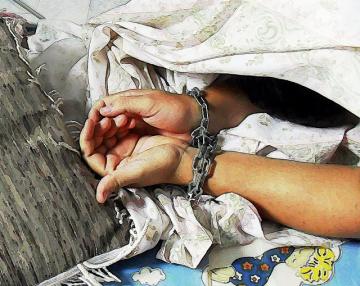
Trafficking in human beings is a severe violation of human rights, explicitely prohibited by the Charter of Fundamental Rights. It is a phenomenon that knows no borders and that one Member State, EU institution or EU agency alone cannot address effectively. Working together in a coordinated and coherent way is therefore essential to eradicate trafficking. The report highlights the successful results that multilateral cooperation between EU agencies has achieved, in coordination with the European Commission and EU Anti-Trafficking Coordinator.
The report covers the period from October 2012 through October 2014, and has been coordinated by EASO as 2014 Chair of the EU’s Justice and Home Affairs (JHA) Agencies network.
The report focuses on areas in which the Agencies have joined forces to support the implementation of the EU Strategy towards the eradication of trafficking in human beings 2012-2016 in line with its five priorities: identifying, protecting and assisting victims of trafficking; stepping up the prevention of human trafficking; increased prosecution of traffickers; enhanced coordination and cooperation among key actors and policy coherence; and increased knowledge of and effective response to emerging concerns related to all forms of human trafficking.
Successes and activities
The report is annexed to the European Commission’s “Midterm report on the Implementation of the EU Strategy towards the eradication of Trafficking in Human Beings 2012-2016”. Together with the report on Joint activities, the agencies, will soon relaease an additional document listing the key actions undertaken by each agency individually to address human trafficking from October 2012 up to October 2014.
Date of article: 17/10/2014
Daily News of: 17/10/2014
Country: EUROPE
Author:
Article language: en
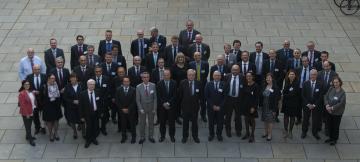
“EU Agencies play a key role in helping the efficient and effective implementation of EU policies,” said FRA Director Morten Kjaerum and current Chair of the network of EU Agencies. “Collectively we have a lot to offer. This is why we continue to jointly raise visibility about the vital work we do to support sustainable and inclusive growth and employment for Europe.”
EU agencies are an integral part of the EU institutional system. For many citizens, they are the closest visible presence of the EU in their lives. Yet, the knowledge about the EU Agencies and their importance in supporting both decision-making processes and the implementation of EU legislation is limited.
Therefore, to increase this knowledge, on 17 October EU agencies are taking part in a high-level panel debate, open to the public, to focus on how EU Agencies can support in bringing the EU closer to its citizens. This panel discussion between Austrian Members of the European Parliament and Heads of EU agencies shall address the huge variety of areas where EU agencies are centres of excellence.
During the Heads of Agencies and Heads of Administrations meetings, various issues of high importance to functioning of the agencies were discussed. These include implementation of the roadmap on the follow-up to the common approach on EU decentralised agencies aiming to increase performance, as well as issues related to EU agencies resources, accountability and efficiency. In addition, time was set aside to explore three important horizontal issues in thematic parallel workshops covering human rights, communication and performance.
The EU Agencies network seeks to improve the coordination, information exchange and agreement of common positions on issues of shared interest among agencies. It is a vital platform that continuously contributes to increase efficiency of the agencies. There are currently 41 agencies, being a member of the network, working on many areas such as: business, innovation, working conditions for growth and jobs; health, safety and the environment; freedom, justice and security; education; industry and agriculture; and transport and satellite infrastructure.
The recently-updated EU Agencies brochure describes the work of the agencies while demonstrating the added value of each agency.
Date of article: 17/10/2014
Daily News of: 17/10/2014
Country: EUROPE
Author:
Article language: de
„Im Hinblick auf die effiziente und wirksame Umsetzung von EU-Politiken spielen die EU-Agenturen eine wesentliche Rolle“, stellte der Direktor der FRA und amtierende Vorsitzender des Netzwerks der EU-Agenturen, Morten Kjaerum, fest. „Gemeinsam haben wir eine Menge zu bieten. Deshalb werden wir unsere gemeinsamen Bemühungen fortsetzen, Bewusstsein für die wichtige Arbeit zu schaffen, die wir zur Unterstützung von nachhaltigem und integrativem Wachstum und nachhaltiger und integrativer Beschäftigung für Europa leisten.“
Die EU-Agenturen sind wesentlicher Bestandteil des institutionellen Systems der Europäischen Union. Viele BürgerInnen nehmen sie in ihrem Leben als die nächstgelegene sichtbare Vertretung der EU wahr. Dennoch ist das Wissen über die EU-Agenturen und ihre Bedeutung sowohl für die Unterstützung von Entscheidungsprozessen als auch für die Umsetzung der EU-Rechtsvorschriften begrenzt.
Um hier Abhilfe zu schaffen, nehmen die EU-Agenturen am 17. Oktober an einer hochrangig besetzten öffentlichen Podiumsdiskussion teil, in der es schwerpunktmäßig darum geht, wie die EU Agenturen dazu beitragen können, die EU ihren BürgerInnen näher zu bringen. Im Rahmen dieser Podiumsdiskussion zwischen österreichischen Abgeordneten des Europäischen Parlaments und Direktoren von EU-Agenturen wird die große Palette von Bereichen thematisiert, in denen die Agenturen der Europäischen Union Kompetenzzentren sind.
Während der Sitzungen der DirektorInnen und VerwaltungsleiterInnen wurden mehrere Themen erörtert, die für das Funktionieren der Agenturen von großer Bedeutung sind. Hierzu gehören die Umsetzung des Fahrplans für Folgemaßnahmen zum gemeinsamen Konzept für die dezentralen Einrichtungen der EU, der auf die Steigerung der Leistung abzielt, sowie Fragen im Zusammenhang mit den Ressourcen, der Rechenschaftspflicht und der Effizienz der EU-Agenturen. Außerdem war die Erkundung von drei wichtigen horizontalen Themen in parallel stattfindenden thematischen Workshops zu Menschenrechten, Kommunikation und Leistung vorgesehen.
Ziel des Netzwerks der EU-Agenturen ist es, Koordination, Informationsaustausch und Abstimmung gemeinsamer Standpunkte zu Themen von gemeinsamem Interesse zwischen den Agenturen zu verbessern. Das Netzwerk ist eine wichtige Plattform, die kontinuierlich zur Effizienzsteigerung der Agenturen beiträgt. Gegenwärtig sind in dem Netzwerk 41 Agenturen zusammengeschlossen, die eine Vielzahl von Arbeitsfeldern abdecken: Wirtschaft, Innovation, Arbeitsbedingungen für Wachstum und Beschäftigung; Gesundheit, Sicherheit und Umwelt; Freiheit, Recht und Sicherheit; Bildung; Industrie und Landwirtschaft; Verkehr und Satelliteninfrastruktur.
Die kürzlich erschienene Neufassung der Broschüre über die EU-Agenturen beschreibt die Tätigkeit der Agenturen und zeigt, welchen zusätzlichen Nutzen die einzelnen Agenturen erbringen.
Date of article: 17/10/2014
Daily News of: 17/10/2014
Country:  Austria
Author:
Article language: en
On 15 October 2014, Ombudsman and IOI Secretary General Günther Kräuter welcomed a delegation of the Uzbek Ombudsman institution „Authorized Person for Human Rights“ to the Austrian Ombudsman Board. The delegation was headed by Ms. Sayora Rashidova, the Authorized Person for Human Rights of the Uzbek Parliament.
Uzbekistan that was one of the first countries of the Commonwealth of Independent States that founded an Ombudsman institution will be celebrating the institution’s twentieth anniversary next year. The institution that is currently in the process of amending its laws on the Ombudsman institution – is striving to further develop its existing legal foundations by profiting from mutual exchange with the Austrian Ombudsman Board.
Ombudsman Günther Kräuter highlighted the mutual benefit of an enhanced cooperation between the two institutions, particularly for the protection and promotion of human rights.